Dialing in a women’s weighted vest for CrossFit is about more than hitting the prescribed load. The right fit, weight distribution, and ventilation let you move freely through runs, pull-ups, push-ups, and squats without hot spots or bounce. Here’s how to choose smart, scale loads, and pick gear that holds up under real training.
Why a women’s weighted vest matters in CrossFit
Women’s torsos are typically shorter with narrower shoulder widths, so a vest that rides too low can jab the hips and compromise breathing. Look for compact plate pockets, soft shoulder straps, and a cinch system that minimizes bounce. Most competitions call for 14 lb for women during Murph; day-to-day training can scale lighter to keep mechanics clean and the engine building.
Recommended loads by workout
- Murph commonly uses a 14 lb vest for women, but other workouts have their own standards. Beginners can scale without a vest.
- Run-heavy or interval WODs: choose load individually; an unweighted version may be appropriate.
- Gymnastics EMOMs (strict pull-ups, dips, push-ups): 8–14 lb; start low and add load only when reps stay crisp.
- Chippers and mixed-mode metcons: 8–10 lb to keep movement quality and transitions efficient.
Fit and features checklist
- Low-bounce fit: A wide, elastic cummerbund or side straps keep the plate tight to your center of mass.
- Comfortable shoulders: Contoured, padded straps reduce trap bite during runs and burpees.
- Ventilation: Mesh panels and open sides help heat dissipate during longer efforts.
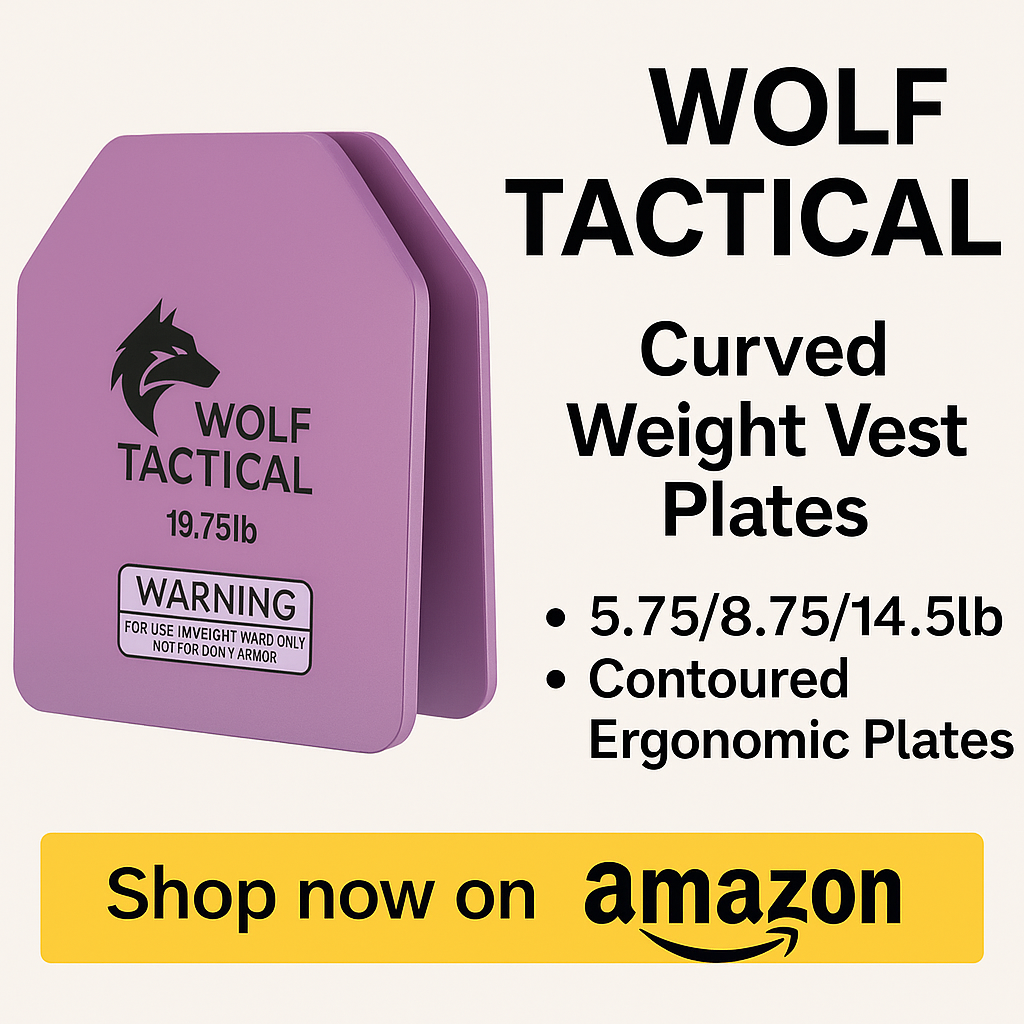
- Plate compatibility: Flat or curved plates should sit high on the chest without impeding breathing.
- Quick adjustments: Easy pull tabs let you snug the vest between movements.
- Range of motion: The bottom edge shouldn’t collide with hips on squats, step-ups, or box jumps.
Two reliable vests I trust for women
The 5.11 Tactical Unisex TacTec Trainer Weight Vest is a CrossFit staple for a reason: secure fit, durable fabrics, and excellent ventilation. Its wrap system minimizes bounce on runs and double-unders, and the shoulder contouring works well for smaller frames.

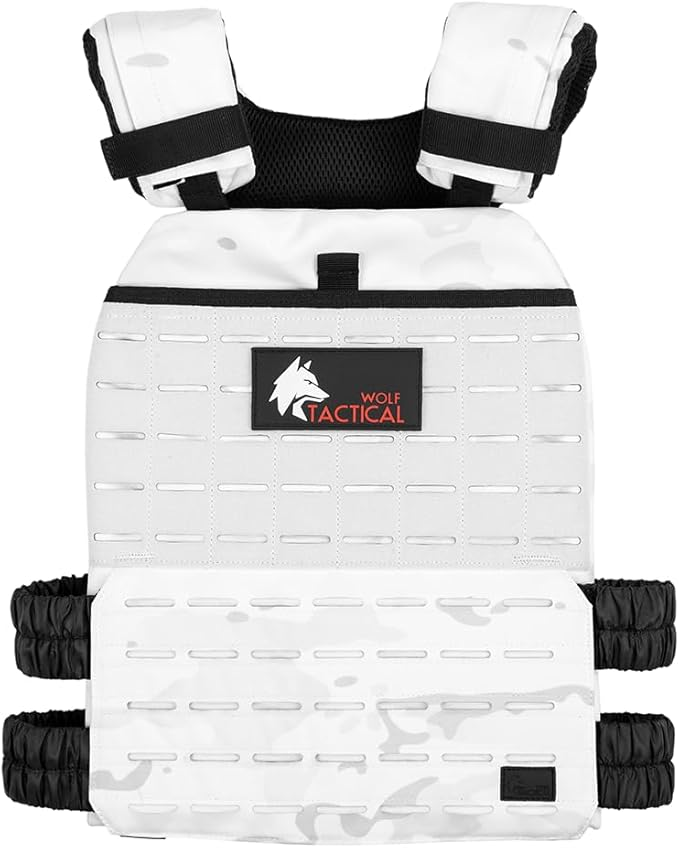
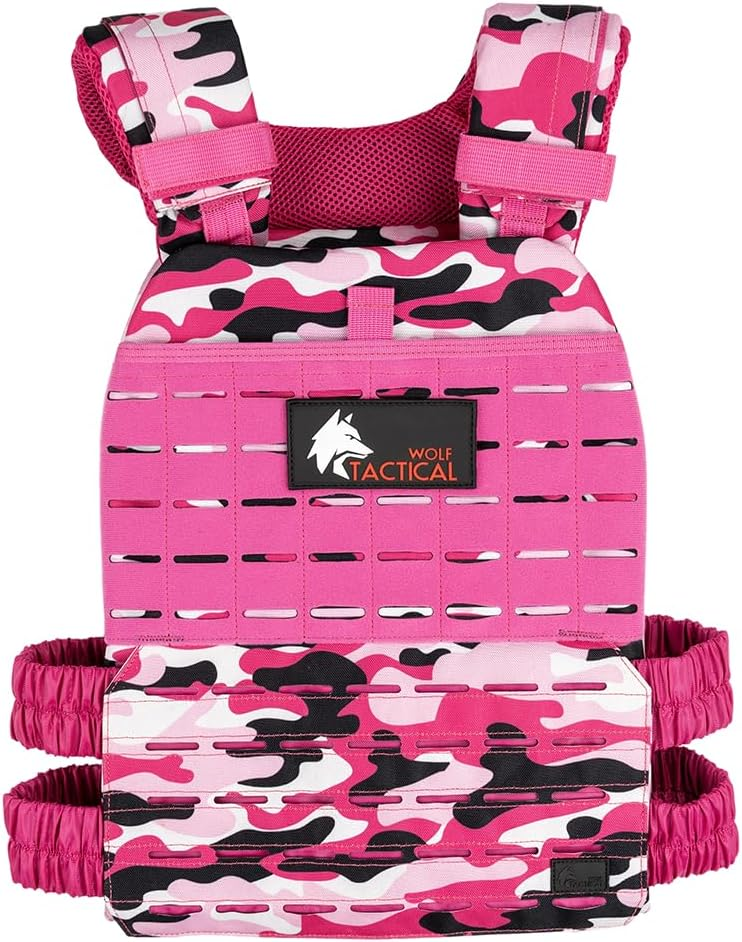
For a budget-friendly, comfortable option, the WOLF TACTICAL Simple Weighted Vest (Men/Women) offers a low-profile chassis and solid plate compatibility. It’s a good pick for newer athletes building toward 14 lb while keeping movement quality high.

Progression and technique that respects your joints
- Start light: 6–8 lb for the first 2–3 weeks, focus on nasal breathing and smooth pacing.
- Add load gradually: Increase 2–4 lb only when you can maintain mechanics across the full WOD.
- Cap smartly: For most women, 14 lb covers hero WOD standards; 16–20 lb is a niche strength stimulus.
- Run form: Shorten stride slightly, land under your center of mass, and avoid overstriding with the vest.
- Pull-ups: Keep ribs down and glutes tight; kipping only if your strict baseline is solid.
- Warm-up: Scap pull-ups, banded face pulls, and calf/ankle mobility to prep shoulders and lower legs.
Estimate your session’s calorie burn
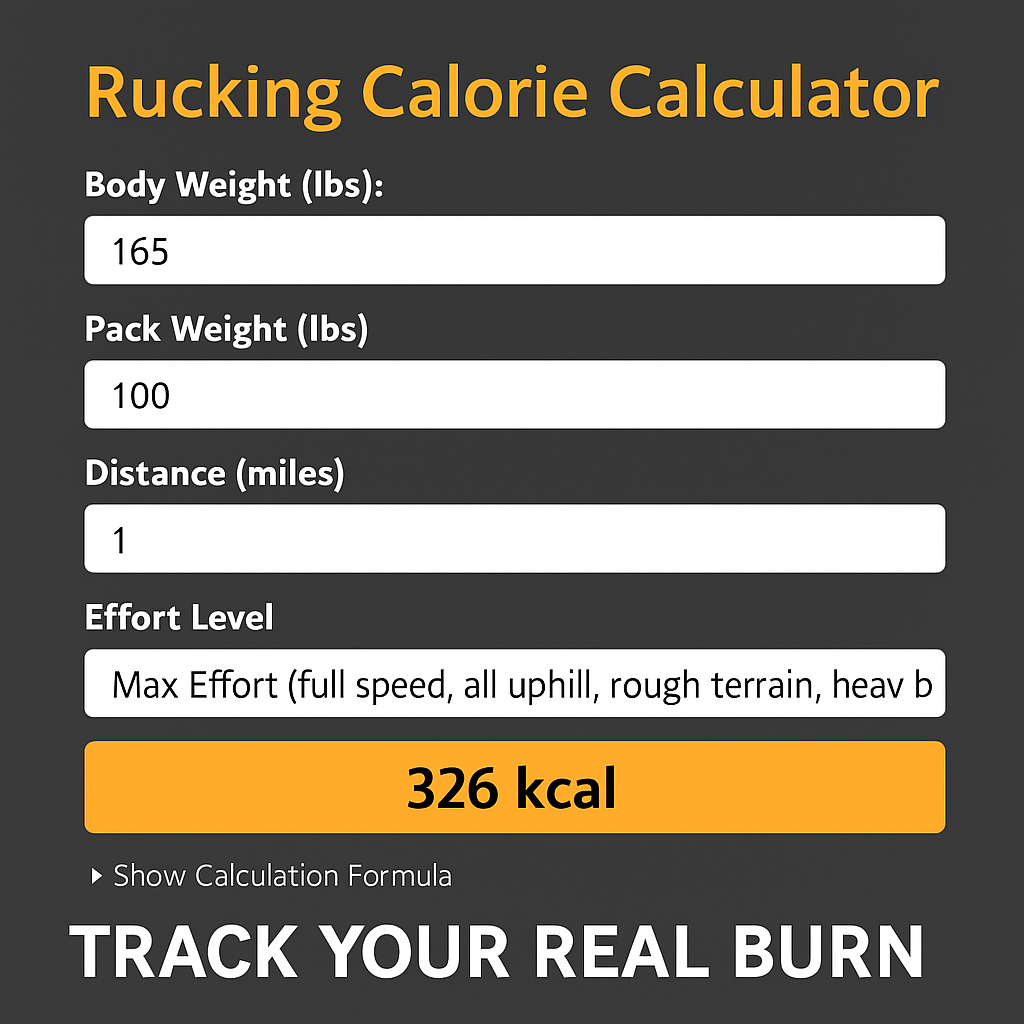
Want a quick read on training load? Use this simple calculator to estimate calories for weighted running, walking between stations, or vest-only sessions. Enter your bodyweight, vest weight, pace, and time to see how today’s WOD stacks up.

Bottom line: Choose a vest that fits your frame, scale loads to preserve movement quality, and build volume patiently. With the right fit and plan, your weighted vest becomes a reliable tool for strength, stamina, and confidence on the whiteboard.