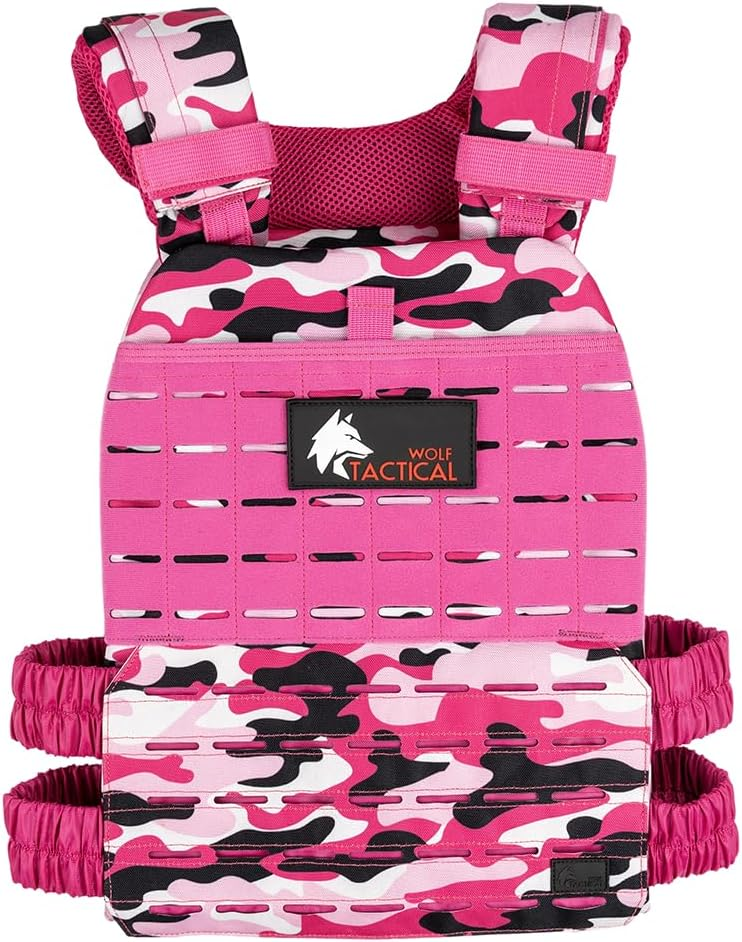
A weighted vest running workout changes the demands of each stride. It is not automatically faster, safer, or better for fat loss than unloaded running.
Define why running needs load
If your aim is ordinary running fitness, a progressive unloaded plan and strength training may already address it. If an occupational or sport task requires loaded running, use specific coaching and approved equipment. Check walking fit and retention first, and consider how extra mass affects balance, breathing, and recovery. Do not add loaded sprints or a new vest to a long run as a default progression. A walking calorie estimate cannot measure the running workout.
- Establish whether loaded running serves a specific task.
- Check walking fit and retention before any coached running exposure.
- Do not use walking calorie estimates to measure running energy expenditure.
Decide whether added load serves the goal
A weighted vest or pack changes the demands of running. Extra load is not a prerequisite for improving pace or endurance, and a snug fit does not guarantee normal mechanics. Establish comfortable unloaded running first. Ordinary easy runs, strength sessions, and gradually planned hills may already address the goal.
If a sport or occupational task requires running with load, seek coaching specific to that task and the equipment. Begin with walking checks, verify retention, and keep any running exposure conservative. Avoid automatic mileage-and-weight increases, loaded sprints, or wearing a new setup for a long run. Stop if the load causes bouncing, compensations, pain, or unusual breathing difficulty.
The resources below are for a separate, appropriate adult walking routine. They do not prescribe sensory treatment, children’s exercise, bone-health care, sport skills, or loaded running.
Track loaded walks with the Rucking app
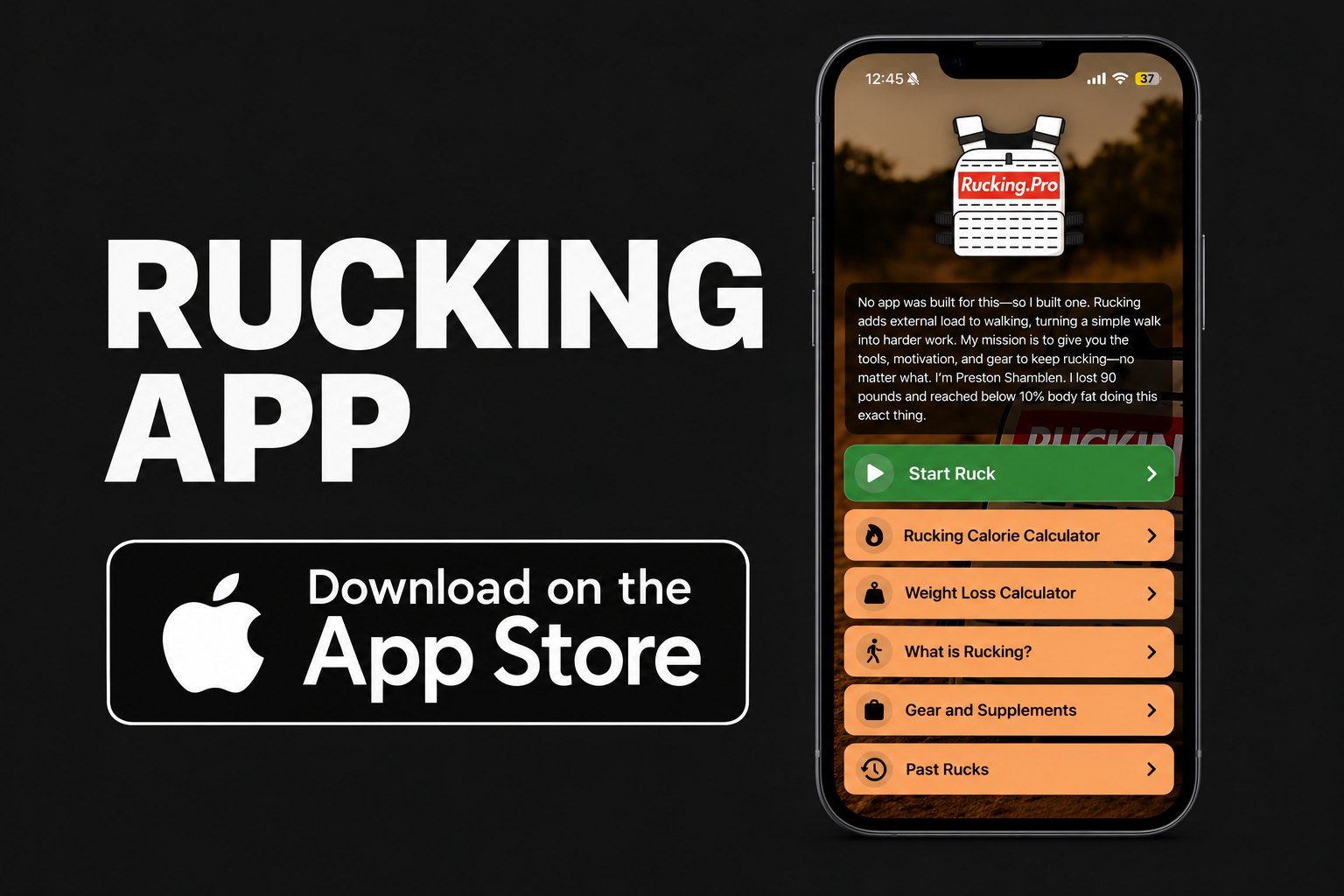
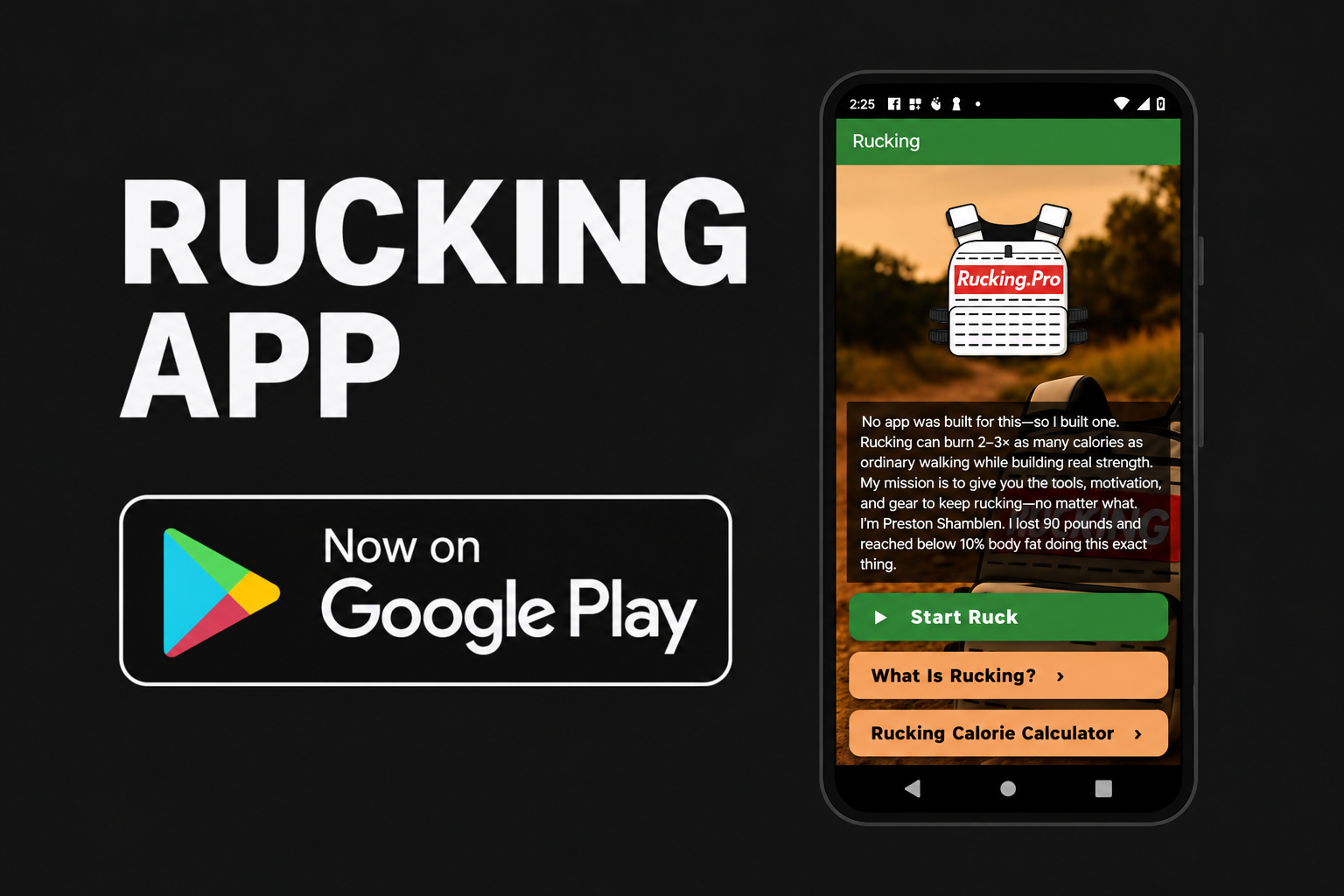
For the walking part of your routine, record total carried weight, route, distance, pace, and time. Compare similar sessions rather than judging progress only by a calorie number. The Rucking app is available for iPhone and Android.


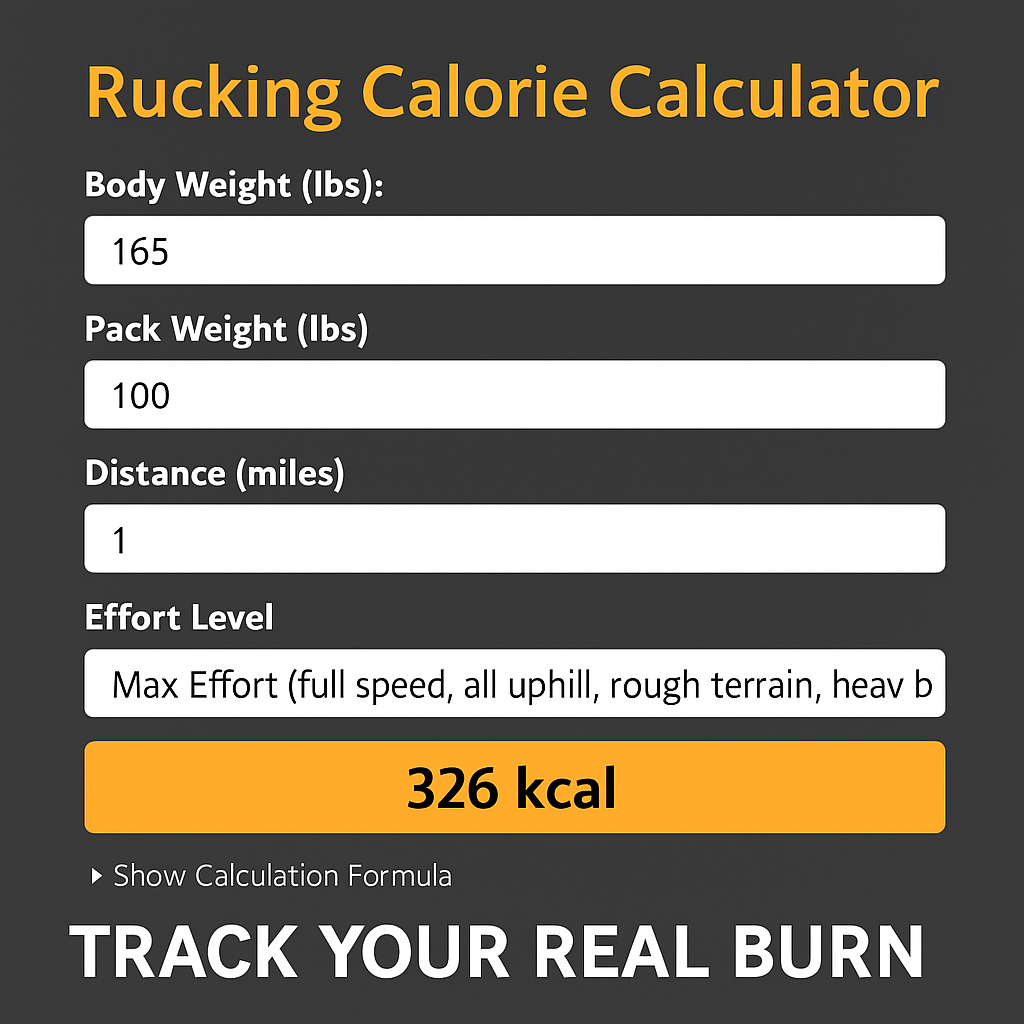
Plan a loaded walk with the Weighted Vest Calorie Calculator or Rucking Calorie Calculator. Use the Rucking Weight Loss Calculator to explore longer-term projections alongside your nutrition plan. These are estimates, not measured energy expenditure or promised weight loss. Walking estimates do not measure a lifting session, mixed WOD, running workout, or therapeutic effect.
Related guide: Weighted vest walking guide.