Rucking vs Weighted Vest: Which One Fits Your Goals?

Rucking vs Weighted Vest: which delivers better results?

Rucking loads a backpack and walks with purpose; a weighted vest spreads load across the torso for walking, stairs, and bodyweight work. Both build aerobic capacity, leg endurance, and calorie burn—yet they feel and stress the body differently. Here’s how to choose between rucking vs weighted vest based on your goals, joints, and weekly schedule.

Key differences that matter

  • Load placement: Rucking places weight behind you, shifting your center of mass backward and encouraging a slight forward lean. A weighted vest centers the load on your torso for a more neutral stride.
  • Posture and muscles: Rucking challenges the upper back, lats, and hips more; vests emphasize core bracing and even loading through the trunk.
  • Stride and terrain: Rucking excels on dirt, hills, and long distances. Vests shine on sidewalks, stairs, and circuits mixed with push-ups, lunges, or pull-ups.
  • Joint feel: Many find vests smoother on the low back; rucks can feel friendlier on the shoulders vs. heavy vests. Both should start light and progress gradually.
  • Weight progression: Rucks often scale in 5–10 lb jumps (plates or bricks). Vests let you fine-tune smaller jumps and move seamlessly into calisthenics.

Who should pick which?

  • Choose rucking if you enjoy longer outdoor efforts, want trap/upper-back strength from load carriage, and plan to build toward 60–120 minute endurance sessions.
  • Choose a weighted vest if you prefer brisk 20–45 minute walks, stairs, or circuits where you can mix in squats, push-ups, or pull-ups without removing a pack.
  • Blend both if you want the best of each: one long ruck day, one or two shorter vest walks plus a vest-calisthenics session.

Simple weekly template

  • Beginner (3 days): Day 1 vest walk 20–30 min at 5–8% bodyweight; Day 2 ruck 30–45 min at 8–12%; Day 3 vest circuit 15–25 min (walk 3 min, 10 squats, 8 push-ups, repeat).
  • Intermediate (4 days): Ruck 45–75 min at 10–15%; Vest walk 25–40 min at 8–12%; Ruck hills or stairs 30–45 min; Vest circuit 20–30 min.

Recommended gear that just works

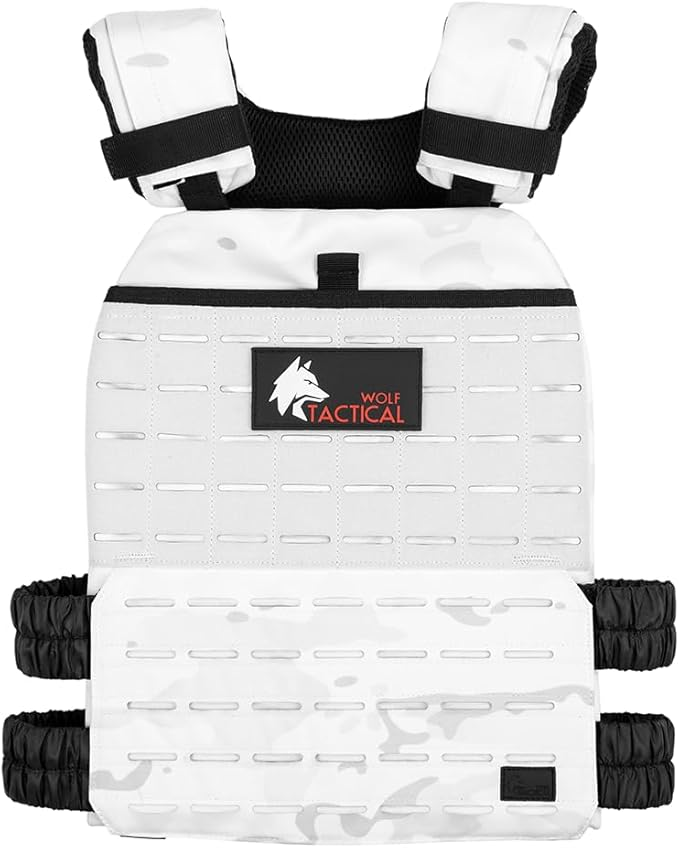
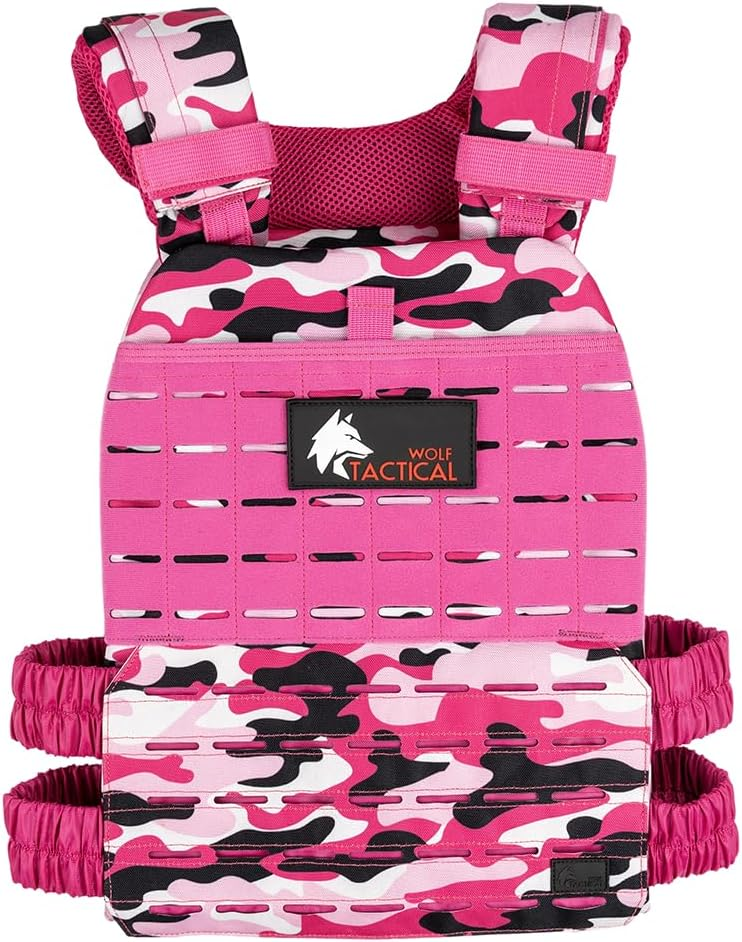
For a comfortable, adjustable vest that suits beginners and seasoned walkers alike, the Wolf Tactical Adjustable Weighted Vest is a reliable pick. For dedicated rucks that handle plates and miles, the GORUCK Rucker 4.0 20L is built for abuse.

Wolf Tactical Adjustable Weighted Vest for comfortable, secure fit on walks and circuits
Wolf Tactical Adjustable Weighted Vest: secure fit, quick weight changes, and smooth walks or circuits.
GORUCK Rucker 4.0 20L backpack designed for rucking with plates
GORUCK Rucker 4.0 20L: rugged frame sheet and plate pocket for stable, long-distance rucks.

Estimate your calorie burn

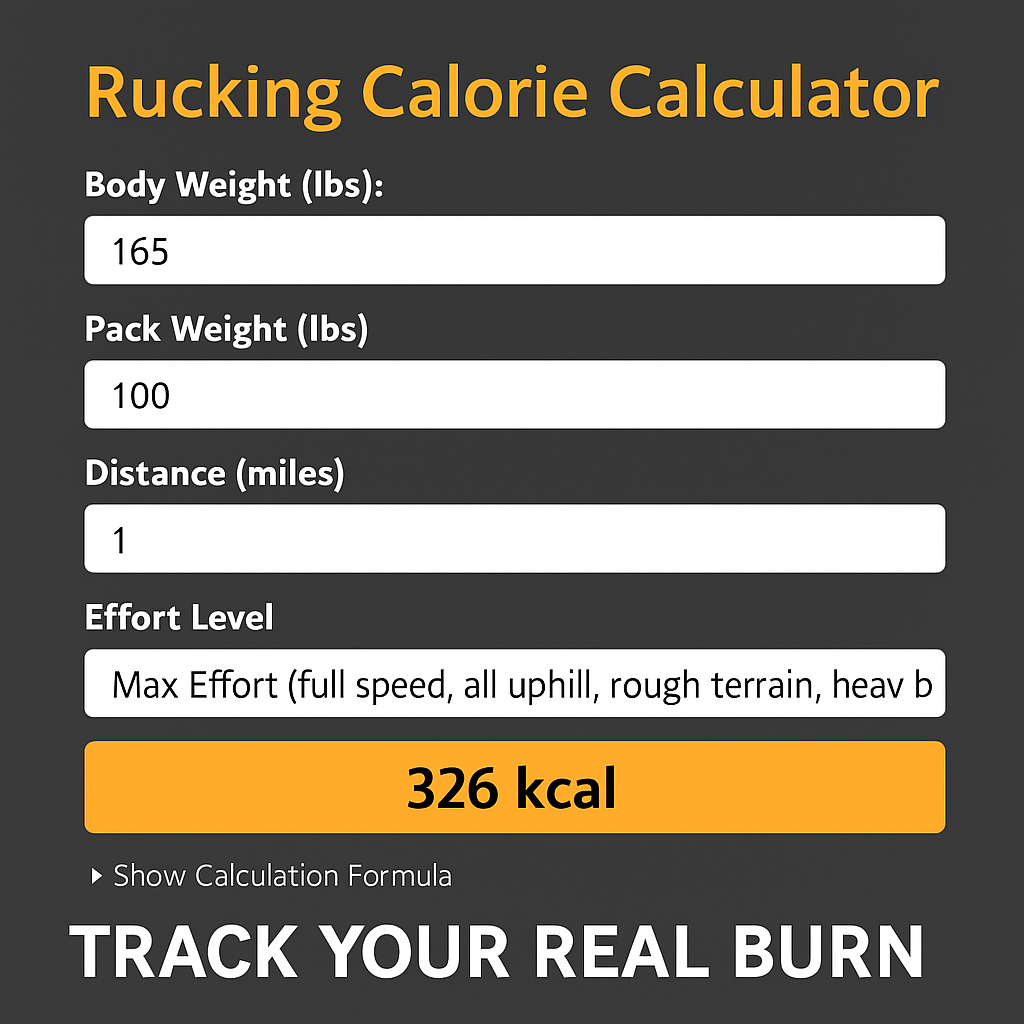
Whether you choose a ruck or vest, knowing your burn helps you plan training and nutrition. Use this calculator to estimate calories by pace, grade, and load:

Rucking and Weighted Vest Calorie Calculator

Rucking and Weighted Vest Calorie Calculator screenshot

Progression and safety

  • Start light: 5–8% of bodyweight for new lifters or anyone returning from time off. Add 2–5 lb every 1–2 weeks as long as form stays crisp and your shins and low back feel good.
  • Pace before load: Increase minutes or terrain first, then weight.
  • Posture cues: Ribcage down, chin tucked, elbows close. With a ruck, tighten the hip belt or sternum strap to reduce sway.
  • Foot care: Moisture-wicking socks, broken-in shoes, and address hot spots early.

Bottom line

If you love long outdoor efforts and progressive endurance, rucking is hard to beat. If you want quick, versatile sessions (and easy transitions to bodyweight moves), a weighted vest is king. Many lifters get the best results by using both—one long ruck for engine building, plus 1–2 short vest sessions to keep weekly volume and calorie burn high without beating up the joints.

Posted in Weighted Vest Training | Tagged , , , , , | Comments Off on Rucking vs Weighted Vest: Which One Fits Your Goals?

How Many Calories Does a Weighted Vest Burn? Real-World Advice

Understanding Calorie Burn With a Weighted Vest

It’s a common question: how many calories does a weighted vest burn? If you’re looking to maximize the return on every step, a weighted vest is one of the simplest ways to ramp up calorie expenditure during walking, hiking, or rucking. Let’s break down the factors that drive calorie burn and how to estimate your own numbers.

Why a Weighted Vest Works

Adding extra weight makes your body work harder for every step. That extra demand forces your muscles and cardiovascular system to burn more energy, increasing your total calories burned. Even a modest vest (as little as 8–20 lbs) can make a typical walk start to feel like a real workout, especially once you progress to hills or trails.

  • Increased muscular activation: Core and lower body work overtime.
  • Boosted heart rate: Elevated heart rate = more calories spent per minute.
  • Greater post-workout afterburn: Your metabolism stays elevated for hours after a vigorous ruck or weighted walk.

How Many Extra Calories Can You Burn?

The exact number depends on your bodyweight, vest weight, walking speed, duration, terrain, and personal metabolism. On average, adding a weighted vest burns between 8-15% more calories than the same walk without extra load. For most people, that’s an additional 30–70 calories per 30 minutes of brisk walking with a 20-lb vest.
Pro Tip: The heavier the vest, the higher the calorie increase—up to a safe point. For most, 5–15% of bodyweight is ideal.

Calculate Your Weighted Vest Calorie Burn

For an accurate estimate based on your conditions—weight, vest load, and distance—use this free online tool below. Select the Weighted Vest option for the most relevant numbers:

Rucking Calorie Calculator screenshot for weighted vest use
Estimate calories burned with any weighted vest using this free weighted vest calorie calculator.

Best Weighted Vests for Calorie Burn

Tips for Maximizing Calorie Burn Safely

  • Start light, increase vest weight gradually.
  • Prioritize posture and form over just adding weight.
  • Mix steady-paced rucks with hills or intervals.
  • Hydrate before and after—heavy vests increase fluid needs.

Ready to upgrade your cardio and see real results? Grab a quality weighted vest and start making every walk or ruck session count for more calories burned!

Posted in Rucking | Tagged , , , , , | Comments Off on How Many Calories Does a Weighted Vest Burn? Real-World Advice

Crossfit Vest Plates: Choosing Plates That Fit Your Vest and WODs

How to pick crossfit vest plates that actually work

When you train with a weighted vest for CrossFit-style WODs, every plate decision matters. Plates change fit, center of gravity, chafe, and the way your body responds to dynamic movements. This guide walks through the practical factors I use when selecting vest plates for interval work, running rucks, and heavy AMRAP days.

Key considerations

  • Profile and thickness: Thin, dense plates sit closer to your torso and reduce leverage that causes swinging during burpees or box jumps.
  • Weight increments: Choose plates that let you progress in small steps—5–10% increases matter a lot for fast conditioning progress.
  • Edge shape and seams: Rounded edges are less likely to cause chafe or pressure points against your ribs during cleans, runs, or sit-ups.
  • Material and durability: Steel or compact composite plates handle drops and repeated slamming better than cheap filler plates.
  • Compatibility: Check the vest manufacturer’s plate dimensions. A plate that’s an inch too tall will bunch in the pocket and move under load.

Practical plate options for CrossFit-style use

For most athletes doing WODs and short rucks, I recommend a mix of slim plates and mid-weight increments. If you’re looking for rugged, purpose-built plates, consider the WOLF TACTICAL Weight Vest Plates—they pack dense weight in a low-profile shape that reduces slosh and bounce.


WOLF TACTICAL Weight Vest Plates in a set
Low-profile plates that minimize movement and fit many tactical and CrossFit vests.

Budget-friendly steel plates like the Yes4All Ruck Weight Plate are another solid choice if you need multiple increments. They’re not as refined for comfort, but they’re durable and easy to stack for incremental loading.


Yes4All Ruck Weight Plate
Steel plates that work well when you need many small weight increases for conditioning.

For heavy strength-focused vest work or weighted calisthenics, a high-capacity system like the Kensui EZ-VEST® MAX V2 accommodates much more load and is built for heavy, repeated use.


Kensui EZ-VEST MAX V2 system
High-capacity vest system for athletes who train with very heavy loads.

Fit tips and programming

  • Start with a low load for dynamic WODs; add plates in small steps until movement quality drops.
  • Place heavier plates centrally to keep the weight close to your spine and reduce forward pull.
  • Test for chafe by wearing the vest for 10–15 minutes of mixed movements before a long session.
  • Rotate plates between sessions to avoid wearing out one plate pocket and to check distribution.

As someone who’s coached and rucked hundreds of sessions, I prioritize plates that let athletes move well and recover quickly between efforts. If you’re tracking calorie burn or planning load progression for a multi-week plan, try the rucking calorie calculator below to estimate session cost and tweak load or duration.

Rucking Calorie Calculator screenshot

Choose plates that match your training goals: slim, durable plates for CrossFit intensity, robust steel for incremental loading, and high-capacity systems for heavy strength work. Test fit before you buy and prioritize movement quality over adding weight too fast.

Posted in Weighted Vest Training | Tagged , , , , | Comments Off on Crossfit Vest Plates: Choosing Plates That Fit Your Vest and WODs

Weighted Vest for Beginners: Starting Your Rucking Journey Right

Why Beginners Should Consider a Weighted Vest

Starting your fitness journey with a weighted vest can be a game-changer. For newcomers to rucking or weighted walking, a vest helps you gradually increase resistance without drastically changing your gait or stressing your joints. Unlike heavy backpacks, weighted vests distribute load evenly across your torso, improving balance and reducing strain on your lower back, making them particularly beginner-friendly.

Choosing the Right Weighted Vest for Beginners

If you’re just getting started, look for adjustable vests that allow you to add or subtract weight as you progress. Comfort and fit are crucial—select a vest with padding, secure straps, and breathable materials. Two of the best options for novices are the Wolf Tactical Adjustable Weighted Vest and the WOLF TACTICAL Simple Weighted Vest. Both are known for their high adjustability and beginner-friendly comfort.

Wolf Tactical Adjustable Weighted Vest for beginners
The Wolf Tactical Adjustable Weighted Vest makes it easy to progress gradually.
WOLF TACTICAL Simple Weighted Vest for men and women
Perfect for men and women—the WOLF TACTICAL Simple Weighted Vest keeps you comfortable as weight increases.

Benefits of Rucking with a Weighted Vest

  • Improved Calorie Burn – Extra resistance means a higher metabolic output, ideal for weight loss and muscle retention.
  • Full-Body Engagement – Distributes weight evenly to activate more core and upper body muscles.
  • Adaptable Progression – Adjust weights to match your growing strength and confidence.

How Much Weight Should Beginners Use?

Most beginners start with 5–10% of their body weight. It’s better to err on the lighter side, master form, and increase in small increments. Listening to your body and maintaining good posture is key.

Calculate Your Calorie Burn with a Weighted Vest

If you want to see how many calories you’re realistically burning during your rucks or walks, use the Rucking Calorie Calculator. Select “Weighted Vest” to get accurate, personalized results.

Rucking calorie calculator weighted vest screenshot
Estimate your calorie burn with the Rucking Calorie Calculator—just choose the weighted vest option.

Tips for a Safe Start

  • Begin with short distances: 1–2 miles is plenty at first.
  • Focus on posture and walking mechanics before adding more weight.
  • Stay hydrated and supplement electrolytes if you ruck in warm weather.

Hydration Matters

If your walks go beyond 30–45 minutes, consider pairing your vest with hydration support. A CamelBak Motherlode Hydration Backpack lets you bring water and even add extra load as you advance.

CamelBak Motherlode Hydration Backpack rucking beginners
The versatile CamelBak Motherlode keeps you hydrated while you adapt to weighted rucking.

Start slow, wear your vest with pride, and watch your stamina, strength, and confidence build every single week.

Posted in Rucking | Tagged , , , , | Comments Off on Weighted Vest for Beginners: Starting Your Rucking Journey Right

Weighted Vest With Weights Included: How to Choose and Train

What a “weighted vest with weights included” actually means

A weighted vest with weights included refers to models that come with built-in or pre-loaded weight rather than requiring you to buy plates separately. These vests are often marketed for walking, rucking, bodyweight training, and conditioning. The convenience is obvious: you buy the vest and start loading intensity without hunting for plates or compatible pockets.

Key pros and cons

  • Pros: Ready-to-use, often cheaper initially, simple to fit and start training.
  • Cons: Less modular—you may hit weight limits sooner, harder to balance or customize increments.
  • Comfort tradeoffs: Built-in weights can reduce adjustability and create pressure points if the vest doesn’t contour well.

How to pick the right one

Start by thinking about your training goals. If you want a daily walking or rucking tool, prioritize comfort, breathability, and secure weight distribution. If you plan to add heavy load for strength or calisthenics later, a modular system with removable plates is often smarter long-term.

Fit and sizing

A properly fitted vest sits snugly against the torso without bouncing. Look for adjustable straps at the waist and shoulders and a design that moves with your ribs during breath cycles. If you are new to weighted work, a lighter built-in option (10–20 lb) is safer than starting heavy.

Training and safety tips

  • Progress gradually: add 5% of bodyweight at a time and only increase if your form remains solid.
  • Prioritize posture: chest up, neutral spine, and short strides when walking or rucking with a vest.
  • Mix intensity: alternate longer, lower-intensity walks with shorter, higher-effort loaded intervals.
  • Check skin and pressure points: padded vests prevent chafing and hotspots.

Estimate how many calories you burn

Use the Rucking Calorie Calculator to get a baseline for sessions with a weighted vest. Enter your weight, pace, distance, and vest load to see realistic calorie estimates. This tool is especially useful when deciding whether a built-in-weight vest will create the daily calorie deficit you want.


Rucking calorie calculator screenshot
Use the Rucking Calorie Calculator to estimate calorie burn with your vest and pace.

Product ideas for vests with included weights

If you favor a ready-to-go vest with comfortable fit for daily walks and rucks, I often point beginners toward reliable, well-padded options. Consider the Wolf Tactical Simple Weighted Vest (Men/Women) for casual load-carrying and walking.


Wolf Tactical Simple Weighted Vest
Comfort-focused vest ideal for walking and beginner rucking—simple, adjustable, ready out of the box.

For those who want the option to add plates later, the WOLF TACTICAL Weight Vest Plates (pairs) let you expand load progressively while keeping an initial built-in option.


Wolf Tactical weight vest plates
Plates to upgrade a simple vest into a heavier training tool when your conditioning improves.

Final practical guidance

For most people a weighted vest with weights included is an excellent gateway to rucking and added intensity. Prioritize fit and adjustability first, then think about expandability. Track sessions and calorie estimates with the calculator above to align training with weight-loss or conditioning goals. As someone who coaches outdoors-first rucking, I recommend starting conservatively and letting consistent progress—rather than heavy early loading—drive long-term gains. If you ever decide you need heavier, modular loading for calisthenics or heavy carries, you can upgrade to plate-compatible systems without changing your walking routine.

Posted in Weighted Vest Training | Tagged , , , | Comments Off on Weighted Vest With Weights Included: How to Choose and Train

How to Train Safely with a Heavy Weight Vest

Why choose a heavy weight vest?

Heavy weight vests let you load the body for strength, calisthenics, and rucking without changing movement patterns. For athletes and outdoor trainers who want to build raw load tolerance—pull-ups, weighted push-ups, marches, and loaded carries—a high-capacity vest is the simplest, most versatile tool. In this guide I cover fit, programming, safety, and how to estimate calorie burn for heavy-vest sessions.

Who this is for

Use a heavy weight vest if you have a strong movement baseline (bodyweight chin-ups, stable gait, no chronic back pain) and want to increase training density or practice loaded endurance. If you’re new to load, start with lighter vests and progress methodically.

Fit and selection

Fit matters as load increases. A heavy vest must sit close to the torso, distribute weight evenly, and not shift during dynamic reps. For truly heavy loading and calisthenics, consider a high-capacity model built for plates and long-term wear:


Kensui EZ-VEST MAX V2 heavy load capable weighted vest
High-capacity vest built for heavy resistance and calisthenics.

One option is the Kensui EZ-VEST® MAX V2, which is designed to carry very heavy loads and keep plates close to the body. If you plan to train near maximal loads for weighted calisthenics, choose durability and adjustability over fashion.

Safety and technique

When adding significant external load, prioritize technique and joint care:

  • Slow progressive overload—add 5% to 10% total load per week on a single variable, not multiple changes at once.
  • Maintain neutral spine—loaded movements magnify poor posture. Keep core braced and hips engaged.
  • Use lower rep ranges for very heavy sets (1–6) on strength days and higher reps (8–20) for endurance or conditioning days.
  • Warm up joints and perform mobility work for shoulders, thoracic spine, and hips before heavy sets.

Programming examples

Pick one primary goal per session—strength, hypertrophy, or ruck endurance. Here are simple templates:

  • Strength day: Weighted pull-ups 5×3, weighted push-ups 5×5, goblet squat 4×6 with vest on for loaded carries.
  • Endurance day: 60–90 minute loaded walk with vest at 10–20% bodyweight, steady pace, focus on consistent breathing.
  • Conditioning: 8–12 rounds of 60s on / 60s off: burpees, vest rows, farmer walks. Keep load moderate to maintain quality.

Estimate calories burned

Estimating calorie burn with a heavy weight vest helps plan recovery and nutrition. Use the Rucking Calorie Calculator to quickly estimate output for walks, rucks, and weighted sessions. It’s the same tool I use to plan client sessions and to dial in calorie targets for fat loss or maintenance.


Rucking Calorie Calculator screenshot

Click the calculator image to enter body weight, pace, distance, and vest load. Use the output as a baseline and adjust based on perceived exertion and actual weigh-ins.

Practical tips from the field

Start every heavy-vest phase with two easy weeks to let tendons adapt. Mix unloaded mobility/drill days to keep nervous system freshness. Hydrate early and monitor sleep—recovery matters more when you add external mass. As an ISSA-certified trainer who lost 90 lbs through rucking, weighted-vest training, and disciplined nutrition, I still recommend heavy, properly used vests as a time-efficient way to increase training horsepower while controlling caloric balance.

Quick checklist

  • Choose a vest that keeps load close to the body and is adjustable.
  • Progress slowly and prioritize form.
  • Use the Rucking Calorie Calculator to estimate energy cost and plan nutrition.
  • Rotate intensity: strength, endurance, and recovery weeks.

With careful selection and programming, a heavy weight vest becomes a durable tool to build strength, improve endurance, and control body composition. Train smart, respect load, and track results.

Posted in Weighted Vest Training | Tagged , , , , | Comments Off on How to Train Safely with a Heavy Weight Vest

Weighted Vest Women’s CrossFit: Choosing the Right Vest for WODs

Why a women’s CrossFit weighted vest matters

Adding a weighted vest to CrossFit workouts is a simple way to increase intensity, improve strength-to-weight ratio, and accelerate conditioning without changing movements. For women doing WODs, the right vest balances snug fit, mobility, and adjustable load so you can progress safely through metcons, box jumps, pull-ups, and running intervals.

Priorities when shopping

  • Fit and comfort: the vest should sit close to your torso without riding up during burpees or box jumps.
  • Adjustability: small, incremental weight options let you add load without wrecking form.
  • Range of motion: shoulder clearance and a slim profile matter for barbell work and rope climbs.
  • Durability: reinforced seams and quality materials stand up to frequent WOD use.

Recommended vests for women’s CrossFit

For CrossFit athletes who prioritize fit and functional movement, two practical options stand out. Both are stable on the torso and offer enough modularity to scale from conditioning to strength blocks.

WOLF TACTICAL Simple Weighted Vest (Men/Women) is built for everyday comfort and rucking-style training while staying compact enough for functional fitness. Its slim profile keeps the weight centered and reduces bounce—important for double-unders and box jumps.


Wolf Tactical Simple Weighted Vest for women's CrossFit
Low-profile vest with adjustable weight pockets for CrossFit-friendly load progression.

5.11 Tactical Unisex TacTec Trainer Weight Vest is another solid choice: engineered for mobility and stability, it works well for WODs that mix running, calisthenics, and barbell complexes. The plate-style weights make incremental loading and quick swaps straightforward.


5.11 TacTec Trainer Weight Vest for CrossFit
Designed for athletes who need secure weight distribution and quick adjustability.

Programming tips for WODs with a vest

Start light and prioritize technique. Weighted vests change leverage, especially on pull-ups and box jumps. Use these rules:

  • Begin with 2.5–5% of bodyweight for skill sessions, and 5–10% for conditioning once form is solid.
  • Increase load in small increments (2.5–5 lb) to maintain quality across sets and reps.
  • Use the vest for short, intense efforts first—sprints, EMOMs, and short AMRAPs—before longer metcons.
  • Check posture after each set; any collapse or swing means unload and rebuild from technique work.

Simple WOD examples

  • 10-minute AMRAP: 5 weighted-vest pull-ups, 10 air squats, 200m run (vest for pull-ups only if needed).
  • EMOM x12: odd – 12 kettlebell swings; even – 8 box jumps with vest.
  • Chipper: 50 double-unders, 40 sit-ups, 30 weighted walking lunges, 20 burpees (vest optional on lunges).

Estimate calorie burn (quick calculator)

Use the rucking calorie calculator to estimate how much extra energy a vest adds during runs or long metcons. It’s a practical starting point for planning recovery and nutrition around hard sessions.


Rucking Calorie Calculator screenshot

Final notes

Weighted vests can be an efficient tool for women’s CrossFit when chosen and programmed deliberately. Prioritize a compact, adjustable vest that matches your movement needs, progress weight slowly, and use short, intense sessions to protect technique. Consistency and patience beat heavy, sporadic loading every time.

Posted in Weighted Vest Training | Tagged , , , , | Comments Off on Weighted Vest Women’s CrossFit: Choosing the Right Vest for WODs

Titan Weight Vest: Fit, Use, and Practical Training Tips

What a titan weight vest should do for you

If you’re shopping the market for a titan weight vest or comparing heavy-duty vests, the decision comes down to fit, load distribution, and how you plan to train — rucking, interval work, or strength circuits. A vest that moves, chafes, or sits too high will defeat the purpose: adding consistent resistance without disrupting form.

Key fit and function checks

  • Shoulder padding and adjustable straps: prevents hot spots and keeps load low and centered.
  • Plate or sandbag compatibility: choose a system that matches your preferred incremental loading.
  • Range of motion: arms and torso should move freely for carries, squats, and rucking.
  • Durability and warranty: heavy vests are an investment — check seams and materials.

For many people the best practical option is a vest that balances comfort for long walks with secure plates for higher-intensity work. A titan-style vest often means heavy-duty construction; that’s useful, but only if it carries the load in the right place.

How to use a titan weight vest safely

Start light. Your joints and posture adapt to added mass over weeks, not days. Begin at 5–10% of body weight for aerobic rucks and increase 5–10 lb every 1–2 weeks as your technique remains sound. Focus on breathing, cadence, and a steady heel-to-toe gait.

Sample progression (first 8 weeks)

  • Weeks 1–2: bodyweight or 5% load, 20–30 minute walks, 3x/week.
  • Weeks 3–4: add 5–10 lb, extend to 40 minutes, include light hills.
  • Weeks 5–8: increase load as tolerated up to 10–15% bodyweight for steady rucks or higher for short conditioning sets.

Mix in strength days where the vest is used for bodyweight pull-ups, push-ups, or farmer carry variations. If you plan heavy weighted calisthenics, consider a vest with secure plate pockets to keep weight from shifting mid-rep.

Choosing between common vest styles

Soft-fill vests feel comfortable for long duration but can migrate. Plate-compatible vests lock weight into place — better for intense intervals and heavy carries. If comfort and fit are priorities (frequent walking, everyday wear), look at options designed for ergonomics.

Two practical, widely recommended vests to consider:


Wolf Tactical Weighted Vest
Wolf Tactical Weighted Vest — comfortable fit and modular pockets for progressive loading.

Consider the Wolf Tactical Weighted Vest for fit-first use in long walks and daily conditioning.


5.11 TacTec Trainer Weight Vest
5.11 TacTec Trainer Weight Vest — durable plate pockets for higher-intensity training sessions.

The 5.11 TacTec Trainer Weight Vest is a good pick if you want secure plate placement for intervals and calisthenics.

Estimate your calorie burn

Want to match weight and distance to expected calorie burn? Use the Rucking Calorie Calculator to get a realistic estimate for vested walks and backpack rucks. Enter your weight, pace, distance, and vest load for a tailored burn estimate.

Rucking Calorie Calculator screenshot

Real results and a simple mantra

I’m Preston Shamblen, ISSA-certified trainer. I lost 90 lbs through consistent rucking, weighted-vest training, and disciplined nutrition; I still recommend weighted vests as one of the most reliable ways to maintain a lower body weight and burn fat consistently. Keep your progression conservative, prioritize form over load, and treat the vest as a tool to add consistent resistance — not as a shortcut.

Quick checklist before you ride out

  • Check fit: straps snug, weight centered low on the torso.
  • Start conservatively and log how you feel each session.
  • Hydrate and include a mobility warm-up for shoulders and hips.

With a proper fit and a steady plan, a titan-style weight vest becomes a durable, versatile tool for cardio, strength, and real-world conditioning.

Posted in Weighted Vest Training | Tagged , , , | Comments Off on Titan Weight Vest: Fit, Use, and Practical Training Tips

20lb Vest for Murph: Fit, Pacing, and Programming

Why a 20lb vest for Murph is a common choice

Using a 20lb vest for Murph is a practical way to add meaningful load without dramatically changing movement mechanics. For most athletes the added weight increases cardiovascular demand and forces better posture while still allowing efficient transitions between the run, pull-ups, push-ups, and squats. This guide focuses on choosing the right vest, pacing strategies, and simple programming to protect the shoulders, lower back, and knees.

Key priorities before you start

  • Fit and stability: a vest that sits high and tight reduces shoulder strain and torso shifting.
  • Range of motion: ensure pull-ups and push-ups aren’t blocked by plates or bulky pockets.
  • Breathing and pacing: Murph with load is a long metabolic event — don’t sprint the first run.

Choosing the right 20lb vest

All weighted vests are not built the same. For Murph you want low-profile, evenly distributed weight and minimal plate movement. Two reliable, athlete-focused options are below. Both keep the load close to your center of mass so you can cycle reps efficiently and protect your shoulders on pull-ups.


5.11 TacTec Trainer Weight Vest for Murph and CrossFit
5.11 TacTec Trainer vest — low-profile, secure fit built for high-rep conditioning.

I use the 5.11 TacTec Trainer Weight Vest for workouts that require lots of movement. It clamps down and keeps plates from migrating during pull-ups and runs.


Wolf Tactical Weighted Vest for Murph and rucking
Wolf Tactical Weighted Vest — affordable, comfortable option for high-rep WODs and rucks.

The Wolf Tactical Simple Weighted Vest is another excellent option for athletes prioritizing comfort and range of motion. Both vests are solid choices — pick whatever fits your torso and lets you breathe and move freely.

Pacing strategies for a 20lb Murph

Murph is 1 mile run, 100 pull-ups, 200 push-ups, 300 squats, 1 mile run. With a 20lb vest your heart rate will be higher; plan accordingly.

  • Start conservative: treat the first mile like a tempo run, not an all-out sprint.
  • Partition sets: 20 sets of 5 pull-ups, 10 push-ups, 15 squats is a common, moderate approach.
  • Keep transitions clean: short, planned rest between movements beats unpredictable failure.

Sample partition (if new to weighted Murph)

  • Run 1 mile steady
  • 10 rounds of: 10 squats, 5 push-ups, 5 pull-ups
  • Run 1 mile steady

Technique and injury prevention

Weighted Murph amplifies any technical flaw. Keep these simple cues:

  • Pull-ups: tuck the ribs, engage lats before initiating, avoid kipping with a swinging load until you know your vest won’t shift.
  • Push-ups: full scapular control and a braced core — don’t let the chest sag under load.
  • Squats: stay upright and let the hips track under the load; shorten your range if depth causes posterior chain breakdown late in the WOD.

Estimate your calorie burn

If you want a rough idea of how many calories Murph will burn with a 20lb vest, use this calculator. It’s not perfect for CrossFit-style WODs, but it gives a useful ballpark for programming and recovery.


Rucking Calorie Calculator screenshot
Estimate energy cost for loaded workouts using the Rucking Calorie Calculator.

Final notes

A 20lb vest for Murph is a sensible, performance-focused load for many athletes. Prioritize fit, practice transitions, and respect pacing. If you’re uncertain about adding weight, run a practice Murph at lighter loads or break the work into manageable sets until your technique holds under fatigue.

Posted in Weighted Vest Training | Tagged , , , , | Comments Off on 20lb Vest for Murph: Fit, Pacing, and Programming

Cap Weighted Vest: Fit, Uses, and Training Tips

What is a cap weighted vest and who should use one?

A “cap weighted vest” typically refers to a low-profile, cap-like vest or small load-carrying vest that concentrates weight across the upper chest and shoulders rather than full-torso plates. These are useful when you want the metabolic benefit of added load without the bulk of a heavy plate carrier or large rucksack. They suit walkers, light ruckers, and athletes who need range of motion for calisthenics.

Key benefits

  • Improved calorie burn on walks and timed circuits without drastically changing gait.
  • Better posture cueing — a modest anterior load helps keep the chest up and shoulders back.
  • Easy to layer under a jacket or over a shirt for year-round use.

Fit, comfort, and safety

Fit matters more with cap-style vests because concentrated weight can create hotspots. Look for adjustable straps and removable pockets so you can rebalance small plates or sand packs. Start with 2–5% of your bodyweight for steady-state walking and progress slowly: add 1–2% increments every 2–4 weeks depending on comfort and recovery.

Practical checklist when buying or using a cap weighted vest:

  • Padding at the collarbones and shoulders to avoid chafing.
  • Low-profile plates or soft weight pockets to maintain range of motion.
  • Durable buckles and a snug system so the load doesn’t shift during intervals.

Programming with a cap weighted vest

Use a cap weighted vest for three main session types:

  • Steady-state walks or rucks: 30–90 minutes at conversational pace to increase daily calorie burn.
  • Interval walks or hill repeats: 10–30 minute sessions alternating effort to build conditioning.
  • Calisthenics and circuits: push-ups, rows, and air squats benefit from a low-profile anterior load that preserves movement mechanics.

Example progression for a beginner: Weeks 1–2 use 5 lbs for 20–30 minute walks three times per week. Weeks 3–4 increase to 8–10 lbs or add a short interval day. Monitor soreness and breathing; cap vests can feel heavier than their weight suggests because load sits near the shoulders and chest.

Tracking calorie burn

One of the simplest ways to dial your sessions is to estimate energy expenditure for your weighted walks. Use the rucking calorie calculator to get a personalized estimate based on weight, load, pace, and duration. That gives you a baseline to adjust duration or vest weight.


Rucking calorie calculator screenshot

Open the calculator, enter your bodyweight, vest load, and pace to see realistic calorie numbers and tailor sessions to fat loss or maintenance goals.

Recommended gear for cap-style loading

For comfort-focused cap-style loading, I prefer compact, adjustable vests that allow small incremental plates or sand pockets. A good, affordable option is the Wolf Tactical Simple Weighted Vest.


Wolf Tactical Simple Weighted Vest for comfortable cap-style loading
Compact, adjustable vest that suits cap-style loading for walking and bodyweight training.

Final tips

  • Start light and prioritize consistency over dramatic weight jumps.
  • Pay attention to posture and skin friction during early sessions.
  • Use a calorie estimate from the rucking calculator to align your sessions with your goals.

Cap weighted vests are a practical compromise between no load and full plate carriers. When fitted and programmed correctly, they boost calorie burn, support posture, and keep your training versatile outdoors.

Posted in Weighted Vest Training | Tagged , , , , | Comments Off on Cap Weighted Vest: Fit, Uses, and Training Tips