As an Amazon Associate I earn from qualifying purchases. This article contains affiliate links.
A CrossFit weighted vest should stay secure through the movements in your workout without blocking your breathing or range of motion. The best purchase is a vest you can fit and load correctly, not the model with the largest capacity.

What vest weight is used for Murph?
CrossFit’s official Murph page includes a 14/20 lb vest option in the prescribed workout. That is a workout standard, not advice that every beginner should wear that load. Its scaled versions reduce the work and omit the vest instruction.
If you are still developing pull-ups, push-ups, running tolerance, or the ability to handle the workout volume, scale those first. CrossFit’s training guidance reserves vested work for athletes prepared for it. A vest should not turn a manageable workout into hours of grinding through failing reps.
Count the carrier, not just the plates
Total worn weight = empty vest + front plate + back plate + accessories. Two plates sold as “8.75 lb each” add 17.5 lb before the carrier. Weigh the assembled setup when you need to meet an event standard. Different carriers have different empty weights.
Wolf Tactical versus 5.11
| Option | Why compare it | Buying check |
|---|---|---|
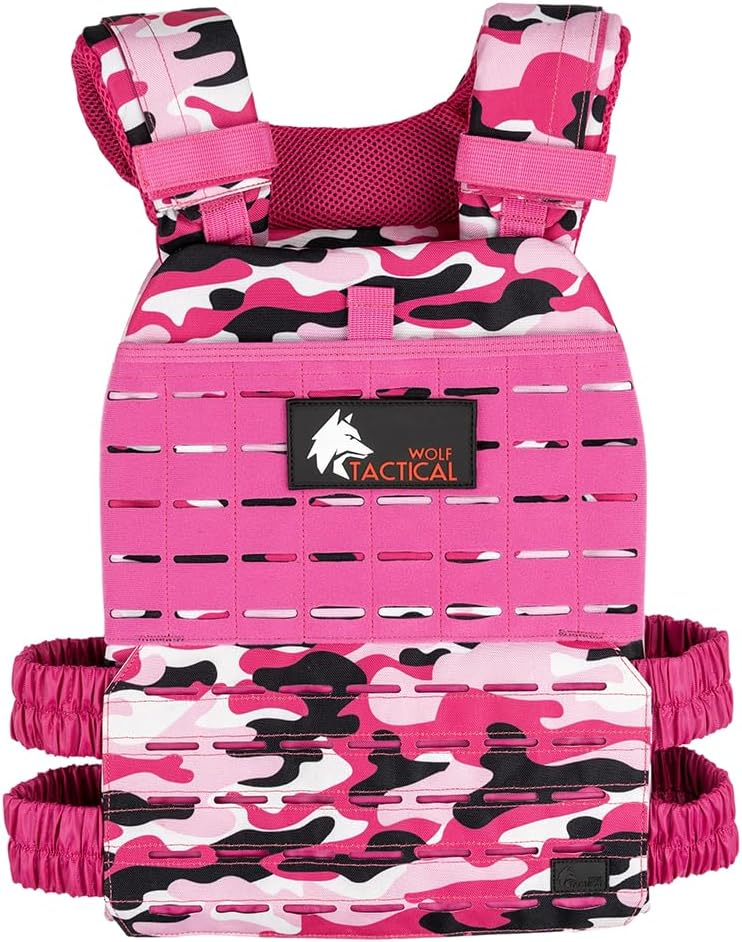
| Wolf Tactical Adjustable Weighted Vest | Front/back plate loading for walks and conditioning | Whether plates are included in the selected listing |
| 5.11 TacTec Trainer Weight Vest | Workout vest with internal plate retention | Correct model and compatible plates |
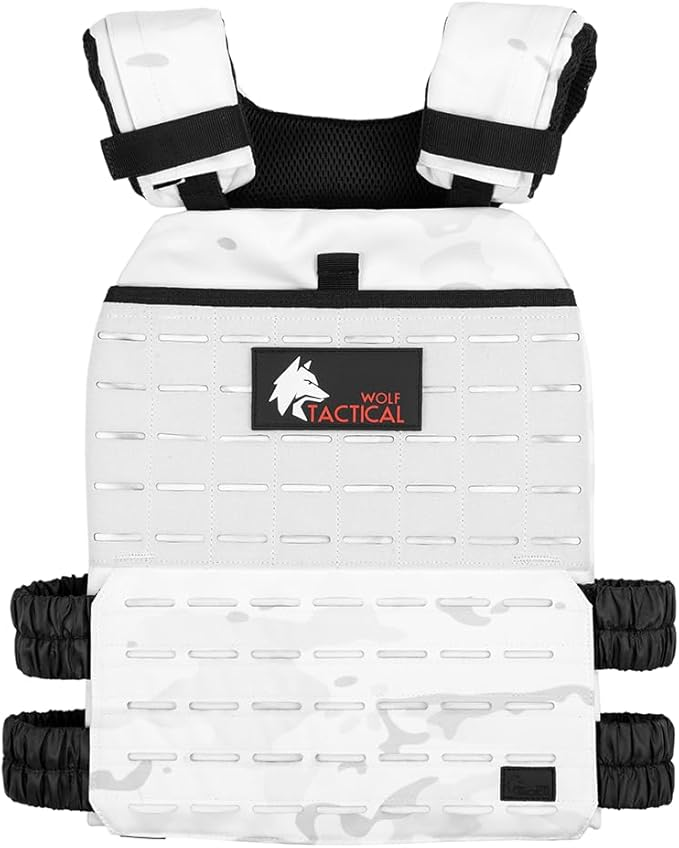
Wolf Tactical’s Adjustable Weighted Vest is our first comparison point for a plate-based training setup. Preston uses Wolf Tactical equipment, and the interchangeable plates give you room to adjust resistance. Fit remains personal: check the strap range rather than assuming “unisex” means every body.
The 5.11 TacTec Trainer Weight Vest is another option. Keep the Trainer and the separate TacTec Plate Carrier models straight when comparing features. See our 5.11 TacTec guide.
Test movement before starting a timed WOD
- Take several deep breaths with the vest fastened.
- Raise your arms and check shoulder clearance.
- Try a few controlled squats and the push-up variation you plan to use.
- Confirm each plate is retained and every closure is secure.
- Reduce the load if the vest shifts, your breathing feels restricted, or movement changes.
Do not add a vest to every movement just because it is available. Loaded jumps, kipping, and fast transitions require appropriate skill and coaching. Controlled walking and selected strength work are easier places to assess the fit.
Use walking to learn the vest
A short, easy walk lets you assess pressure points without the fatigue of a full WOD. Repeat a comfortable session before making it harder. Avoid increasing weight, running volume, and gymnastics volume together.
Can the app calculate calories for Murph?
Use it for your weighted walks and rucks. A walking estimate cannot capture all the gymnastics and running transitions of a mixed workout; do not present it as a measured Murph calorie total.
References: CrossFit Murph and CrossFit’s scaling guidance.
Track weighted walks with the Rucking app
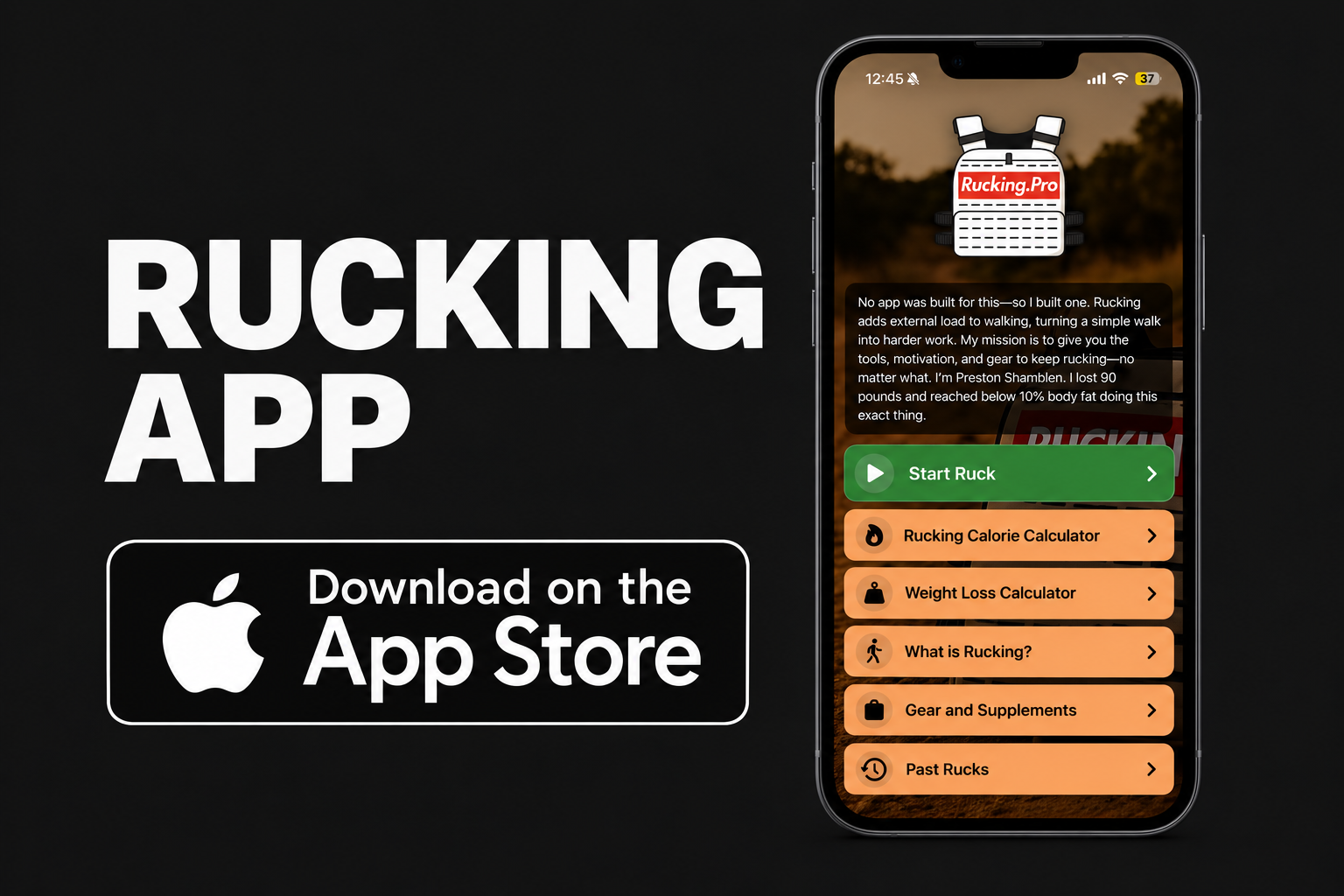
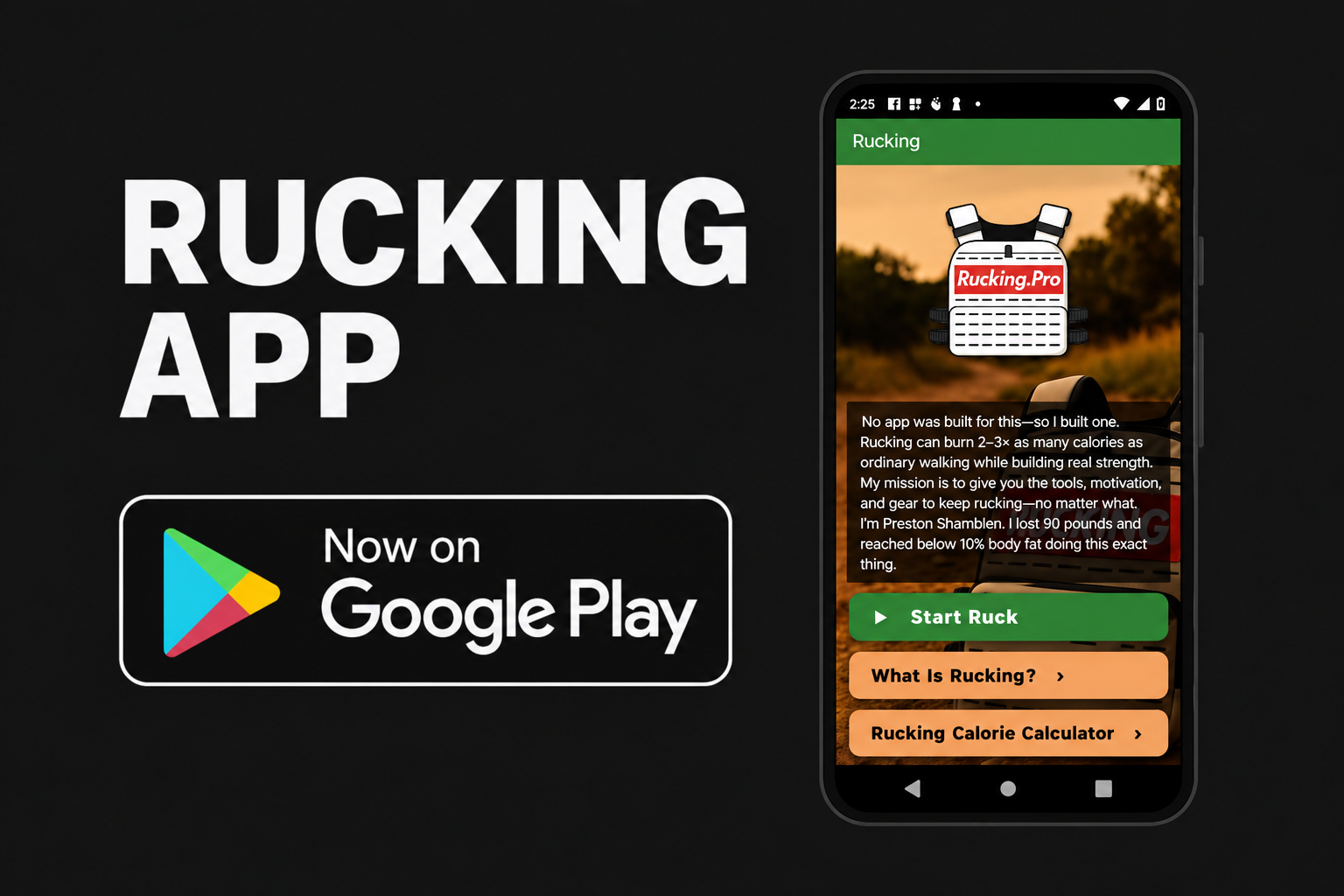
The Rucking app doubles as a weighted vest calorie calculator and walking tracker. Select weighted vest, enter your body weight and total carried load, then tap Start Ruck. Track GPS distance, elapsed time, pace, elevation gain, and estimated calories while you walk. With permission, save completed workouts to Apple Health on iPhone or Health Connect on Android. Health features depend on permissions and available data.


Get the iPhone app · Get the Android app
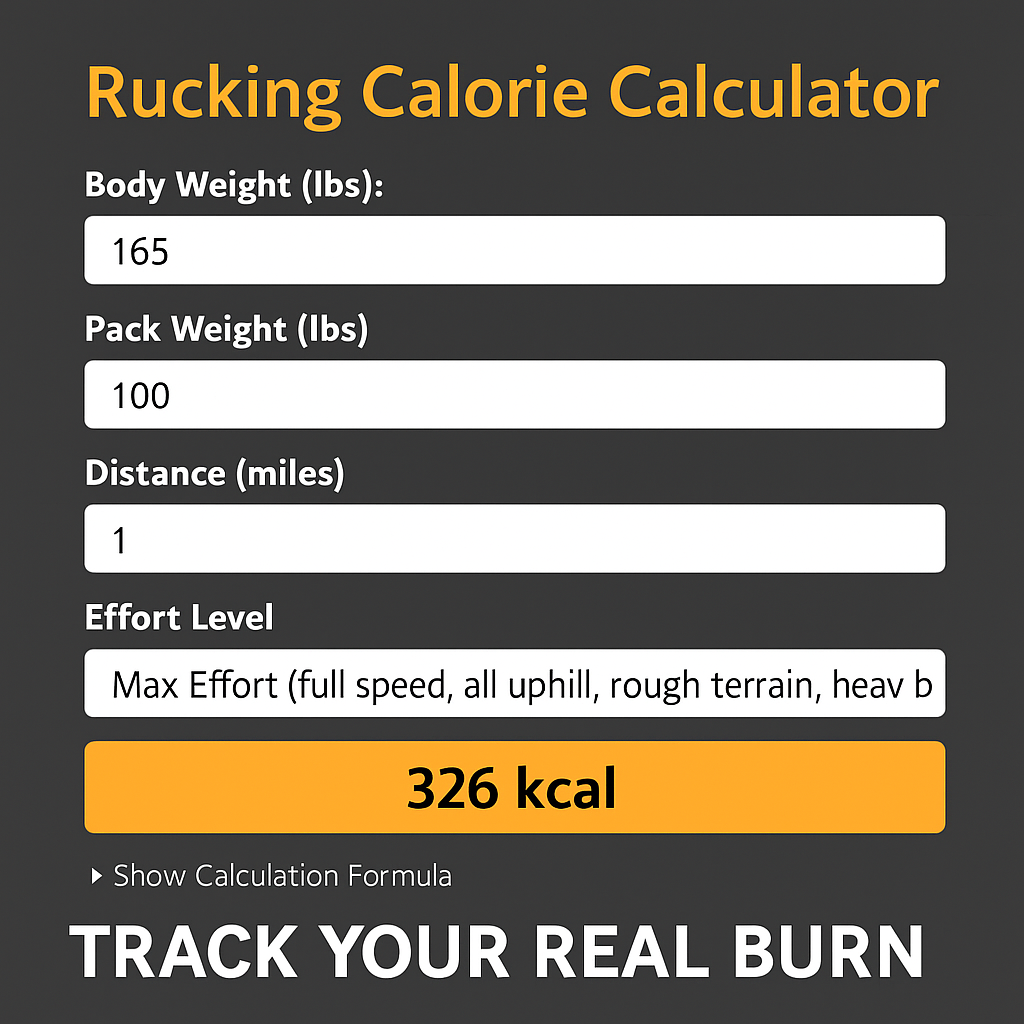
Prefer planning in your browser? Use the Rucking Calorie Calculator or Rucking Weight Loss Calculator. Calorie values are estimates, and weight-loss projections depend on nutrition and consistency. The walking calculator does not measure the energy cost of a strength workout or mixed WOD.