Weighted Compression Vest: How to Choose, Fit, and Train

What is a weighted compression vest?

A weighted compression vest is a low-bulk, snug-fitting vest designed to hold weight close to your torso. Unlike loose plate carriers or bulky sandbag vests, a compression-style vest minimizes bounce, distributes load evenly across the chest and back, and keeps your hands free. That makes it a smart choice for walking, rucking on sidewalks or trails, stair climbs, and bodyweight strength sessions like push-ups, squats, and pull-ups.

Why train with one

  • Higher calorie burn: Adding 5–20 lb to your frame increases the work your legs and lungs must do on every rep or step.
  • Joint-friendly loading: The weight sits close to your center of mass, reducing shearing forces versus hand-held loads.
  • Better movement quality: Hands-free load lets you swing your arms naturally and keep posture tall on walks and rucks.
  • Time efficiency: Light to moderate loads turn a 30–45 minute walk into a potent conditioning and fat-loss session.

How to choose the right weighted compression vest

  • Fit and adjustability: Look for wide shoulder straps and secure side closures so the vest hugs your torso without restricting breath.
  • Weight range you’ll actually use: Beginners typically start with 5–10% of bodyweight. Ensure the vest can scale up as you progress.
  • Breathability: Mesh panels and quick-dry fabric help manage heat on longer efforts.
  • Plate or pouch system: Plate-compatible vests swap loads fast; pouch systems fine-tune weight in smaller increments.
  • Movement goals: For walking and rucking, choose stability and comfort. For calisthenics, prioritize low profile and zero bounce.

Estimate your calorie burn

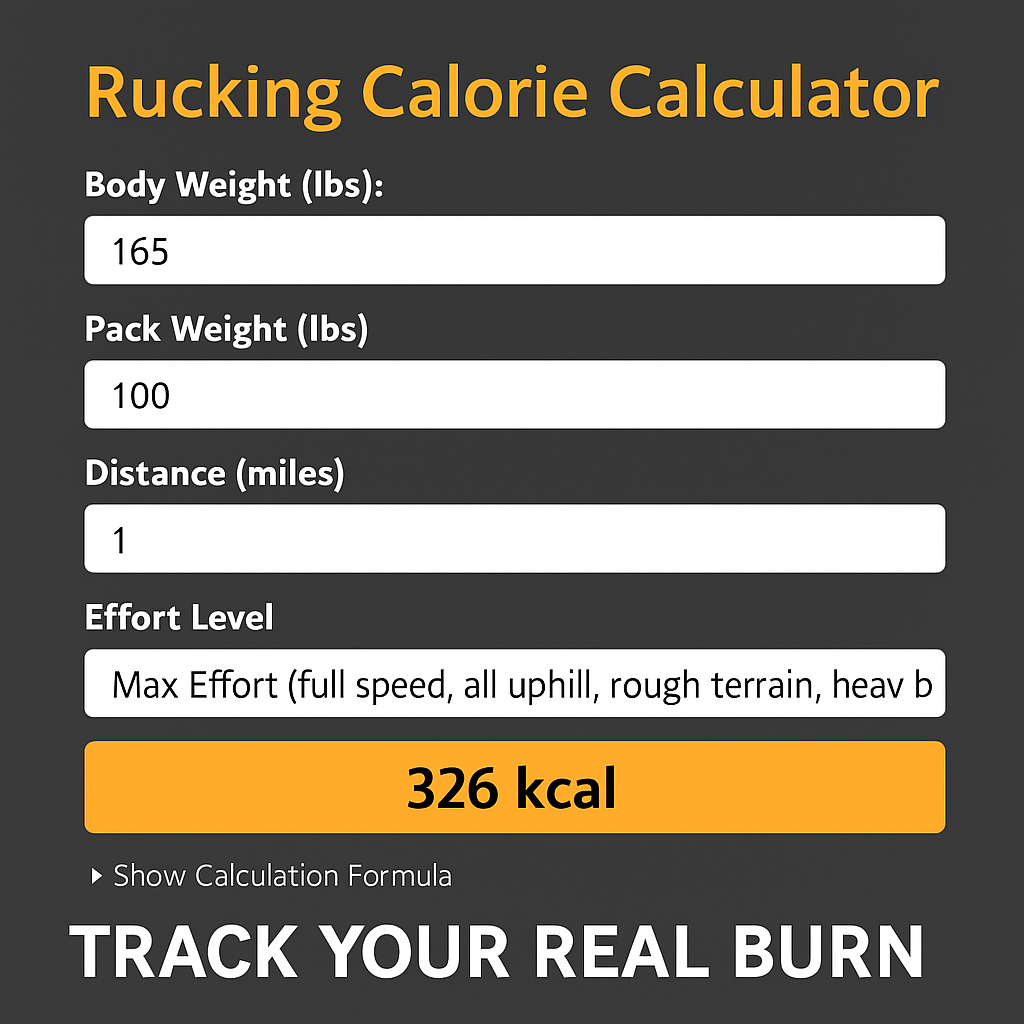
You can estimate sessions using the Rucking Calorie Calculator. Set your bodyweight, added load (vest weight), pace, distance or time, and terrain. It’s built for rucking, but the physics is the same for weighted-vest walking.

Open the Rucking Calorie Calculator

Rucking Calorie Calculator screenshot for estimating weighted-vest walking calorie burn
Use the calculator to plan pace, load, and duration for your weighted-vest walks.

How to start safely

  • Start light: 5–10% of bodyweight for 2–3 weeks. If you’re 180 lb, that’s 9–18 lb total vest weight.
  • Progress gradually: Add 2–5 lb or 5–10% time per week, not both. Keep one variable steady while the other climbs.
  • Session structure: 5–10 min easy warm-up; 20–40 min brisk walk or step-ups; 5–10 min cool-down and calf/hip mobility.
  • Posture cues: Tall chest, slight forward lean from ankles, short quick steps, elbows drive back. If hips or knees ache, reduce load or volume.
  • Heat management: Wear breathable layers, hydrate, and avoid mid-day heat until you’ve adapted to the load.

Coach’s gear picks

If you want a dependable compression-style fit, these vests handle both walking and bodyweight strength well:

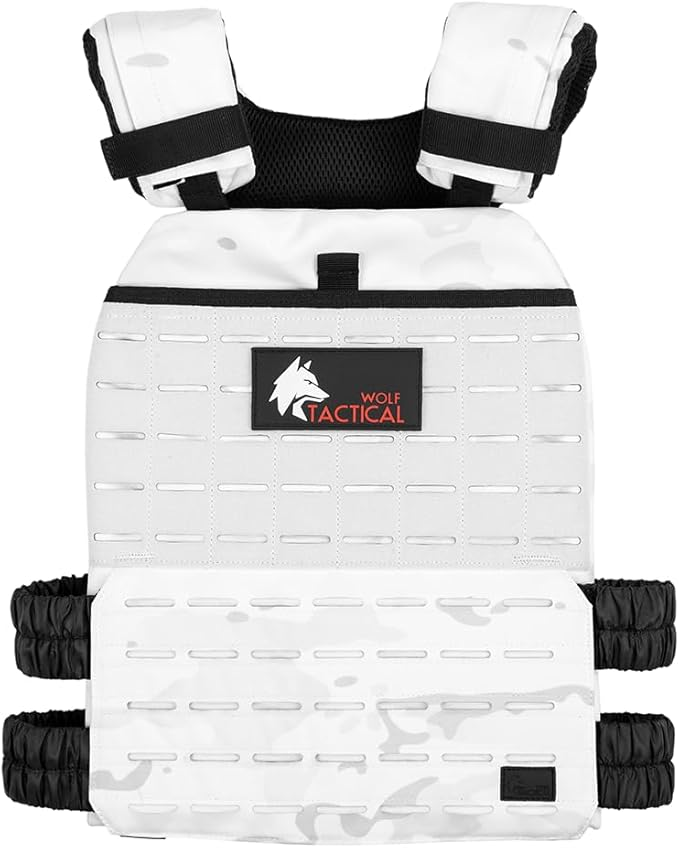
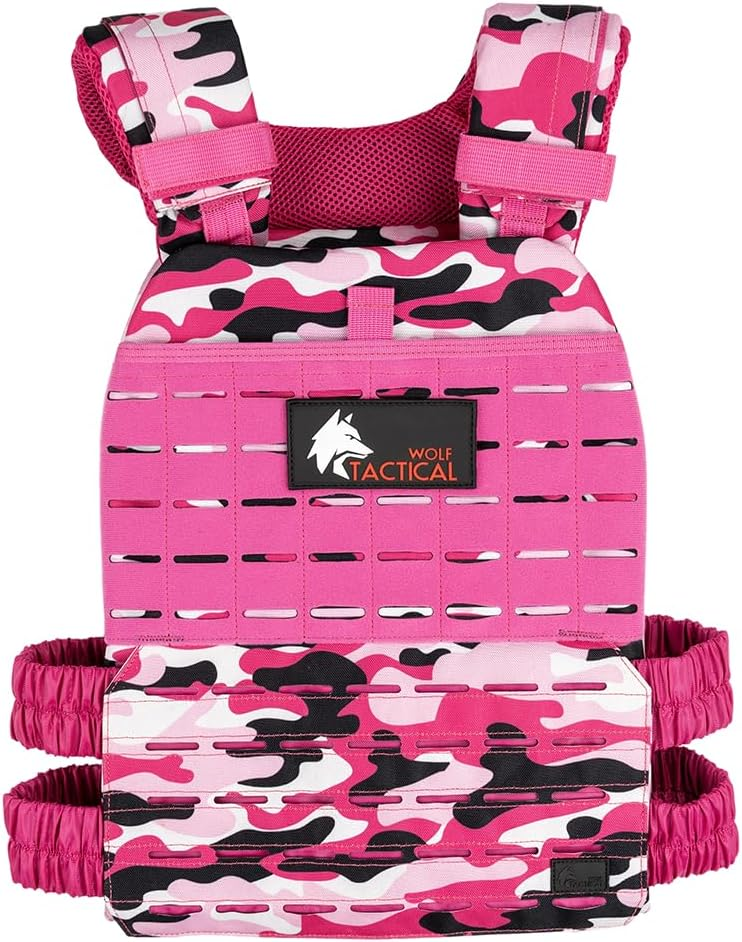
Wolf Tactical Adjustable Weighted Vest — stable, comfortable, and easy to size for smaller or larger torsos.

Wolf Tactical Adjustable Weighted Vest with snug compression fit
Low-bounce fit and quick adjustments make it ideal for walks, step-ups, and calisthenics.

5.11 Tactical Unisex TacTec Trainer Weight Vest — breathable, rugged, and plate-compatible for easy load changes.

5.11 TacTec Trainer weight vest with breathable build for training
Durable, comfortable plate carrier design that still hugs the torso for a compression feel.

Need plates? Pair your vest with WOLF TACTICAL Weight Vest Plates (pairs) to fine-tune load.

WOLF TACTICAL Weight Vest Plates in pairs for easy load changes
Switch weights quickly to match recovery status or workout goals.

Maintenance

  • Air-dry fully after sweaty sessions; avoid high heat.
  • Wipe salt and grit from straps and buckles weekly.
  • Check stitching and Velcro for wear; replace plates or pouches if they rattle.

Whether you’re upgrading daily walks or adding a punch to bodyweight days, a well-fitted weighted compression vest is a simple, durable way to build conditioning without beating up your joints.

Posted in Weighted Vest Training | Tagged , , , , | Comments Off on Weighted Compression Vest: How to Choose, Fit, and Train

Heavy Vest: How to Train Safely and Build Strength

Why choose a heavy vest for training?

Using a heavy vest changes how your body receives load during movement. Unlike dumbbells or a barbell, a weighted vest distributes mass directly on your torso, forcing your legs, hips, and core to work simultaneously. For outdoor athletes, military trainees, and anyone looking to increase carry capacity and metabolic demand, a heavy vest is one of the most efficient tools you can add to a program.

Benefits of training with a heavy vest

  • Higher calorie burn during walking, hiking, and interval work due to increased metabolic demand.
  • Improved load carriage mechanics and posture compared with uneven handheld weights.
  • Scalable intensity — add or remove plates to match progress and goals.
  • Minimal equipment needed: you can do sprints, farmer carry variants, bodyweight circuits, and long rucks.

How to start safely with heavy vest work

Start light and progress slowly. A common mistake is slamming on a heavy load and assuming the body will adapt fast. Prioritize movement quality and recovery. Typical progression looks like this:

  • 2–4 weeks of bodyweight conditioning and short walks without a vest.
  • Introduce a light vest or plate load (5–10% of bodyweight) for short sessions: 10–20 minutes two to three times a week.
  • Increase load by 5–10% every 2–4 weeks while keeping volume manageable.

Programming examples

For strength and conditioning you can alternate days:

  • Day A — Short weighted hill sprints (6–8 x 30–60s with full recovery)
  • Day B — Endurance ruck or long walk (45–90 minutes at conversational pace)
  • Day C — Weighted circuits (push-ups, rows, step-ups) wearing the vest for added load during movements

Choosing the right heavy vest

If your primary goal is heavy strength-based loading and calisthenics, look for vests designed to accept large plates and high total load capacity. The Kensui EZ-VEST® MAX V2 is purpose-built for heavy work and can handle hundreds of pounds—ideal when you want to progress beyond handheld weights.


Kensui EZ-VEST MAX V2 heavy weighted vest for intense calisthenics and rucking
High-capacity weighted vest for heavy loading and advanced bodyweight training.

Consider fit, comfort, and how the vest sits across your shoulders and sternum. If you plan long-distance rucks, you may prefer a combination of a ruckpack with plates and a lighter vest for agility work.

Track your progress and calories

When you add significant load, your calorie burn increases predictably. Use the Rucking Calorie Calculator to estimate energy expenditure for weighted walks and rucks — it helps you program recovery and nutrition around heavy sessions. Try the calculator below:


Rucking Calorie Calculator screenshot

Practical tips

  • Listen to joint and low-back feedback — pain is a sign to reduce load or fix technique.
  • Keep increments small: 5–15 lb increases are plenty for most lifters.
  • Use a mix of high-intensity short sessions and lower-intensity long rucks for balanced adaptation.
  • Prioritize sleep and protein when training with a heavy vest — recovery determines progress.

Real-world experience and coach perspective

As a coach and someone who uses weighted-vest training, I recommend heavy vests when strength and load-specific conditioning are your priority. I’ve seen athletes move faster and maintain lower bodyweight more reliably when they combine progressive vest loading with disciplined nutrition. Preston Shamblen lost 90 lbs through rucking, weighted-vest training, and consistent nutrition, and still recommends weighted vests as one of the most reliable ways to maintain a lower body weight and burn fat consistently.

Heavy vest work is powerful, but respect the load. Progress deliberately, monitor recovery, and use tools like the calorie calculator above to keep training sustainable and effective.

Posted in Weighted Vest Training | Tagged , , , , | Comments Off on Heavy Vest: How to Train Safely and Build Strength

Plate Loaded Weight Vest: How to Choose, Fit, and Train

What is a plate loaded weight vest?

A plate loaded weight vest is a wearable frame that lets you secure standard weight plates to your torso so you can add load to bodyweight training and walks without holding dumbbells. Unlike soft pocket vests or flat plate carriers, plate-loaded systems typically use a rigid yoke and posts that accept iron or bumper plates. The result is scalable loading that can progress far beyond what most traditional vests allow.

Plate-loaded vest vs. plate carrier: key differences

  • Load range: Plate-loaded systems can scale from light to very heavy (often 100+ lb). Plate carriers use fixed plates (usually 5–20 lb each) and top out lower.
  • Placement: Plate-loaded designs center plates higher and closer to the body’s midline, reducing sway. Carrier plates sit front/back and feel more distributed but are limited in shape and thickness.
  • Stability & movement: For calisthenics (pull-ups, dips, squats), a locked-in plate tree reduces bouncing. Plate carriers excel for conditioning circuits and outdoor rucks where comfort and simplicity matter.
  • Comfort: Plate carriers have broad shoulder pads and fabric wrap; they’re comfy for long walks. Plate-loaded rigs are more rigid; adjust carefully to avoid hot spots.
  • Cost & versatility: If you already own weight plates, a plate-loaded vest offers huge range for the money. If you want quick on/off conditioning loads, a carrier with dedicated plates is simple and tidy.

How much weight should you start with?

  • Walking/steps: 5–10% of bodyweight to begin. If you’re 180 lb, start with 10–20 lb. Build by 5 lb per week if joints and posture feel good.
  • Calisthenics strength: Begin around 5–15% of bodyweight on push-ups and rows; 0–10% on pull-ups and dips until form is rock-solid. Add 2.5–5 lb per session once you hit target reps.
  • Rucking/outdoor intervals: Favor comfort and posture. If you feel your stride shorten or your low back tighten, drop 5–10 lb and extend distance.

Programming ideas

  • Pull-up focus: 5 sets of 3–5 reps loaded; finish with 1–2 back-off sets unweighted for clean technique.
  • Push-up ladder: 6, 8, 10, 8, 6 with steady tempo; rest 60–90 seconds.
  • Lower-body trio: Step-ups x 8/leg, split squats x 8/leg, walking lunges x 20 steps; 3–4 rounds.
  • Weighted walk: 20–40 minutes on mixed terrain. Keep nasal breathing and tall posture; if cadence breaks down, reduce load.

Estimate your calorie burn

Curious how many calories you burn during a weighted walk or ruck? Use this calculator to dial in effort and track progress. It works great for weighted vest walking and backpack rucking.

Rucking and weighted-vest calorie calculator screenshot
Calculate your calories burned with weighted-vest walking or rucking.

Fit, posture, and safety

  • Secure the load: Plates should be clamped or pinned tight so they don’t rattle. Loose plates waste energy and stress joints.
  • Strap tension: Snug enough to prevent bounce, loose enough to breathe. Take a full inhale; if straps pinch or your ribs can’t expand, loosen slightly.
  • Neutral spine: Keep ribcage stacked over pelvis. If the vest pulls you forward, reduce load or raise the plates higher.
  • Joint-friendly progressions: Add volume before load. Master range of motion and tempo, then increase weight.

Recommended plate-loaded and plate-carrier options

If your goal is heavy, progressive calisthenics with standard plates, consider the Kensui EZ-VEST® MAX V2. For simpler conditioning with carrier-style plates, pair a compatible vest with WOLF TACTICAL Weight Vest Plates.

Kensui EZ-VEST MAX V2 plate-loaded weight vest for heavy calisthenics
kensui EZ-VEST® MAX V2: load with standard plates up to serious weights for scalable strength work.
WOLF TACTICAL weight vest plates for plate carriers
WOLF TACTICAL Plates: simple, durable carrier plates for conditioning and interval walks.

Whether you choose a plate loaded weight vest for maximal strength or a plate carrier for conditioning, prioritize stable load placement, clean technique, and gradual progression. That’s how you build durable strength and conditioning without beating up your joints.

Posted in Weighted Vest Training | Tagged , , , , , | Comments Off on Plate Loaded Weight Vest: How to Choose, Fit, and Train

Small weighted vest: best fit and use for walking and rucking

Why choose a small weighted vest?

A small weighted vest is the practical first step for anyone who wants to add load to walking, hiking, or rucking without committing to a full rucksack. It sits close to the torso, reduces swing, and keeps the center of mass stable so you can maintain posture and avoid shoulder strain. Use it for short rucks, interval walks, or bodyweight workouts.

Key benefits

  • Better posture and balance compared with a loose backpack
  • Lower risk of hot spots and chafing if it fits properly
  • Easy to add to daily walks for consistent calorie burn

Fit, sizing, and common fit mistakes

Fit matters more than brand when you’re choosing a small weighted vest. Look for a vest that sits high on the chest and wraps around the ribcage without pinching the shoulders. Common mistakes include buying a vest that’s too large (it shifts and causes friction) or too small (it rides up and restricts breathing).

Checklist for a good fit

  • Snug around the ribs—no large gaps between vest and torso
  • Adjustable straps that lock down so plates don’t move
  • Padding at the collarbone and along the shoulders to prevent pressure points
  • Breathable fabric if you plan to walk or ruck in hot weather

How to start training with a small weighted vest

Begin with conservative loads. On your first few sessions, add 5–10% of your bodyweight or start with 5–10 pounds if you’re new to load. Keep walks short (20–30 minutes) and monitor for any discomfort. Increase load or duration only when your posture remains solid and you can breathe comfortably.

Sample 6-week progression

  • Weeks 1–2: 5–10 lb, 2–3 sessions per week, 20–30 minutes
  • Weeks 3–4: Add 5 lb or 10–15 minutes per session
  • Weeks 5–6: 15–25 lb depending on comfort, add one longer walk (45–60 minutes)

Practical tips for comfort and durability

Wear a thin moisture-wicking layer under the vest to reduce chafing. Use anti-chafe balm on common friction points if you plan longer sessions. Inspect seams and weight pockets regularly—cheap stitching is what fails first, not the plates.

Recommended small weighted vest options

For comfort-focused training, I recommend starting with a simple, adjustable vest built for rucking and walking. Two options I often point to:

WOLF TACTICAL Simple Weighted Vest (Men/Women) is lightweight, adjustable, and comfortable for daily walks.


WOLF TACTICAL Simple Weighted Vest in use
Adjustable, comfortable fit for walking and short rucks.

If you want a more rugged training option that still fits close to the body, consider the 5.11 Tactical Unisex TacTec Trainer Weight Vest for heavier training and calisthenics.


5.11 TacTec Trainer Weight Vest
Rugged trainer vest for mixed calisthenics and weighted walking.

Estimate calorie impact

Want to know how many extra calories a small weighted vest will add to your walk? Use this simple calculator to estimate that change based on your weight, pace, and added load.

Open the Rucking Calorie Calculator


Rucking Calorie Calculator screenshot

Final notes

Small weighted vests are a low-friction way to increase daily calorie burn and improve posture. Start light, prioritize fit, and progress slowly. If a vest rubs, re-evaluate fit before adding weight—consistency beats intensity when you’re building a sustainable habit outdoors.

Posted in Weighted Vest Training | Tagged , , , , | Comments Off on Small weighted vest: best fit and use for walking and rucking

Unbroken weight vest: fit, comfort, and practical rucking tips

Real-world take on the unbroken weight vest

The market for weighted vests is crowded; the unbroken weight vest is one of many options people consider when they want to add load to walking, rucking, or bodyweight training. This post breaks down fit, comfort, and how to use one for steady calorie burn and longer rucks without creating hotspots or posture problems.

What matters most in a weighted vest

When evaluating any vest—Unbroken or otherwise—prioritize these practical items: stability, weight distribution, adjustability, and breathability. If a vest shifts or concentrates load high on the shoulders, it will create pain and force you to change gait, which kills training quality.

Fit checklist

  • Shoulder padding and a low profile so it sits under pack straps or coat layers.
  • Even distribution of weight across the chest and back panels.
  • Secure closures that don’t loosen with sweat and movement.
  • Ability to remove or add plates in small increments for progressive loading.

Using the unbroken weight vest for rucking and walking

Start light. For most folks, add 5–10% of bodyweight and test 20–30 minute walks for a week. Note comfort, breathing, and any joint pain. Increase load no more than 5% of bodyweight per two weeks and keep cadence steady.

Quick program for steady calorie burn

  • Week 1–2: 10–20 minutes at conversational pace with a light vest.
  • Week 3–6: 30–60 minutes, 2–4 times per week; add 5–10 lb if comfortable.
  • Maintenance: two rucks per week 45+ minutes to maintain conditioning and fat loss.

For planning calorie targets or comparing how different loads affect burn, I recommend using the rucking calorie calculator. Click the image below to open it and try a few weight/load scenarios before you commit to heavier sessions.


Rucking Calorie Calculator screenshot

Product notes and alternatives

If you like the simplicity of a vest like the unbroken model but need proven comfort or options for heavier work, consider one of these practical alternatives I recommend for different needs.

Wolf Tactical Adjustable Weighted Vest is a solid choice for everyday rucking and walking: adjustable, breathable, and comfortable for long use.


Wolf Tactical Adjustable Weighted Vest
Adjustable, breathable vest built for long walks and progressive loading.

If you want a backpack-style option for longer or more structured rucks, a rucker pack keeps load off the shoulders and improves comfort over distance.

GORUCK Rucker 4.0 20L pairs well when weighted plates are preferred to plate pockets; use it for military-style rucks or when you need a durable pack.


GORUCK Rucker 4.0 20L rucksack
Durable ruck pack for heavy or long-distance load-carrying.

Final practical advice

Don’t chase one-off marketing claims. Test the unbroken weight vest for comfort on short walks, check how it behaves under sweat, and compare with alternatives if you plan long rucks. Keep progression deliberate, monitor posture, and use a calorie calculator to match effort with goals.

If your priority is comfort and long-term consistency, choose a vest or ruck that lets you add small increments of weight and doesn’t force a change in gait. That’s how you build mileage and calorie burn without injury.

Posted in Weighted Vest Training | Tagged , , , , | Comments Off on Unbroken weight vest: fit, comfort, and practical rucking tips

Murph weight vest: standards, fit, and smart scaling to crush the workout

The Murph is a hero workout built around grit and smart pacing. If you’re adding a weight vest, getting the load, fit, and strategy right matters as much as your engine. Here’s how to choose the right load, keep it secure, and scale intelligently so you can finish strong and stay healthy.

What weight should you use for Murph?

Competition standards are 20 lb for men and 14 lb for women. Those standards are appropriate for experienced athletes who can perform strict pull-ups and sustained push-up and squat volume without the vest. If you’re new to weighted calisthenics, scale thoughtfully:

  • Beginner: Bodyweight (no vest) or 6–10 lb.
  • Intermediate: 10–14 lb with strict movement standards.
  • Advanced: 14–20 lb, depending on your pull-up strength and running tolerance.

Progression tip: Earn the vest by hitting the full volume bodyweight first with repeatable form, then add 10% of bodyweight or the next logical step toward 14/20 lb.

Fit and comfort: lock the vest down

A loose vest magnifies impact on runs and pulls your shoulders forward on push-ups. Keep the load tight to your centerline and high on the torso so your hips and knees aren’t fighting a bouncing mass. Plate-style vests generally ride flatter and reduce chest bounce during runs and pull-ups.

The 5.11 Tactical Unisex TacTec Trainer Weight Vest is a proven option for Murph because it hugs the body and allows full shoulder elevation for pull-ups and overhead work.

5.11 TacTec Trainer Weight Vest ideal for Murph workout
5.11 TacTec: stable fit and great range of motion for the run–pull–push–squat demands of Murph.

If you want a simpler budget-friendly setup, the WOLF TACTICAL Simple Weighted Vest (Men/Women) offers a snug profile that’s comfortable for longer runs and big-volume push-ups and squats.

WOLF Tactical simple weighted vest for Murph training
WOLF Tactical Simple Vest: clean profile and easy adjustability for consistent movement quality.

Partitioning and pacing that works

Unpartitioned Murph is for advanced athletes. For most, partition the reps to maintain clean form and steady breathing. Two proven templates:

  • 20 rounds of Cindy: 5 pull-ups, 10 push-ups, 15 squats. Keeps push-ups fresh and short.
  • 10 rounds: 10 pull-ups, 20 push-ups, 30 squats. Fewer transitions; requires stronger push-up capacity.

Run pacing: open the first mile about 10–15% slower than your 5K pace. You should start round one breathing, not gasping. On the final mile, hold a strong, even stride—don’t sprint the first 200 meters and blow up.

Movement standards and technique

  • Pull-ups: full hang, chin over bar. Use a grip you can repeat; avoid kipping until you can stabilize the vest.
  • Push-ups: ribs tucked, chest touches the ground without flaring, no worming.
  • Squats: hip crease below knee, heels down, torso tall. The vest encourages chest-forward posture—fight it with tight upper back and braced core.

Safety, scaling, and recovery

If you’re not hitting depth/lockout or your push-ups devolve into singles early, reduce the load or volume. Sub ring rows or banded pull-ups to protect shoulders. Break push-ups before you fail: quick sets of 5–10 reps with short rests beat grinding singles.

After the workout, walk 5–10 minutes, then prioritize upper-back and hip flexor mobility. Rehydrate and get in 0.6–0.8 g protein per lb of bodyweight over the day to support recovery from high-volume calisthenics.

Estimate your calorie burn with a vest

Running and high-rep calisthenics in a vest spikes energy use. Use the calculator below to estimate your burn based on bodyweight, pace, load, and time. It works well for weighted-vest training.

Rucking and weighted-vest calorie calculator
Plug your stats to estimate calories for the run and bodyweight work while wearing a vest.

Quick checklist

  • Load: 20 lb men / 14 lb women for Rx; scale down if form breaks.
  • Fit: high, tight, and centered—no bounce.
  • Partition: 20x (5/10/15) or 10x (10/20/30) for most athletes.
  • Warm-up: shoulder activation, scap pulls, calf/hip prep for running.
  • Recovery: easy walk, mobility, protein, and sleep.

Train consistently, keep standards honest, and let the vest weight reflect your current capacity—not your ego. You’ll finish faster, safer, and come back stronger next year.

Posted in Weighted Vest Training | Tagged , , , , | Comments Off on Murph weight vest: standards, fit, and smart scaling to crush the workout

5.11 plates for vest: buying guide and sizing tips

Why choose 5.11 plates for vest training

If you own a 5.11 TacTec-style vest or are considering the 5.11 TacTec Trainer Weight Vest, selecting compatible plates matters for fit, comfort, and safe load distribution. This guide covers plate types, sizing, and how to match plates to your goals—whether you’re building strength, adding ruck-style conditioning, or using the vest for interval work.

Key factors when choosing plates

  • Profile and shape: Low-profile plates sit flatter against the body and reduce pressure points. Rounded or thin rectangular plates are easiest to stack inside training vests.
  • Material: Cast iron or steel plates are durable but can shift. Soft-filled or polymer-encased plates give a little more forgiveness for dynamic movement.
  • Weight increments: Smaller increments (2.5–5 lb) let you progress safely. If you plan heavy loading, 10–45 lb plates are useful for rucking-style progression.
  • Compatibility: Check pocket dimensions of your 5.11 vest—plates that are too wide or too thick will bunch and create hot spots.

Practical plate options for 5.11 vests

Most users select one of three plate families: small steel plates, soft/filled plates designed for vests, or dedicated ruck plates sized for backpack pockets. If you plan frequent running or dynamic movement, favor low-profile plates or soft inserts to reduce chafe and improve range of motion.


5.11 TacTec Trainer Weight Vest with removable plates
5.11 TacTec Trainer Weight Vest—popular for modular plates and training versatility.

Another practical option for bulk weight increments are ruck plates like the Yes4All Ruck Weight Plate. These are commonly used for rucking and backpack-style loading because they’re shaped to sit inside a ruck or plate carrier pocket.


Yes4All ruck weight plate for vests and backpacks
Yes4All ruck plates fit many vests and backpacks for modular loading.

Fit and comfort tips

  • Start lighter than you think—add 5–10% of bodyweight in small increments to gauge comfort and posture impact.
  • Use thin padding or a base layer to reduce chafing where plates contact ribs and shoulders.
  • Distribute weight evenly—front and back balance prevents forward lean and low-back fatigue.
  • If plates shift, consider using smaller plates spread across pockets rather than one heavy block.

How to match plates to your training

Beginners aiming for conditioning or fat loss should favor smaller total loads and longer duration walks. Strength-focused athletes can stack heavier plates for short sets and calisthenics. If you want an exact estimate of calories burned carrying different plate loads and paces, use the rucking calorie calculator below to plan progression and recovery.


Rucking calorie calculator screenshot

Run a few scenarios: 10–20 lb in the 5.11 vest for longer walks versus 30–45 lb for short ruck intervals. The calculator helps you compare energy cost and set realistic targets for weight-loss or performance plans.

Final checklist before you buy plates

  • Confirm pocket dimensions and plate thickness.
  • Pick material and profile based on movement type (soft for running, solid for static strength).
  • Buy multiple small increments to fine-tune load distribution.
  • Test for comfort on a short walk before committing to long rucks.

Choosing the right 5.11 plates for vest use is about fit and progression more than maximum weight. Thoughtful selection reduces injury risk and makes training consistent and productive—exactly what you want when you’re building conditioning with a weight vest.

Posted in Weighted Vest Training | Tagged , , , , | Comments Off on 5.11 plates for vest: buying guide and sizing tips

How to pick a comfortable weighted vest

How to pick a comfortable weighted vest

Comfort is the difference between a vest that gets worn three times a week and one that lives in the closet. If you plan regular rucks, walks, or daily conditioning with added load, prioritize fit, padding, and adjustability over gimmicks. This guide walks through what actually makes a comfortable weighted vest, how to test fit, and a couple of practical product options that work for long sessions outdoors.

Why comfort matters

Discomfort shifts your movement patterns, which reduces efficiency and raises injury risk. A poor-fitting vest digs into shoulders, traps heat, or bounces during power walking. A comfortable vest lets you focus on pace and posture, not on rubbing or hotspots.

Key fit and design features to prioritize

  • Even weight distribution: Look for vests with internal pockets that spread plates or sand packs across the torso rather than concentrating them on the spine.
  • Adjustable torso fit: Multiple straps or lacing let you dial in snugness for different shirts and seasons.
  • Shoulder padding: Thick, contoured shoulder pads reduce pressure and prevent chafing on longer rucks.
  • Breathable materials: Mesh panels and moisture-wicking liners matter for comfort on hot days.
  • Low-profile plates: Plates that sit close to the body reduce bounce and improve range of motion.
  • Stable lockdown: A vest that doesn’t ride up when you walk or run is essential; test with brisk walks and dynamic movement.

How to size and test a vest before committing

When trying a vest, do these checks in order:

  • Put on the vest with your typical training clothes.
  • Add the weight you plan to use and walk for at least 5 minutes. If possible, try a few minutes of fast walking or light jogging.
  • Check for pressure points at the collarbone, shoulders, and lower ribs.
  • Try torso rotation and bending—does the vest move independently of your body or is it locked to you?
  • Confirm that adjustment straps are easy to reach and secure without being overly tight.

Practical recommendations

For comfort-first training, I favor vests with wide shoulder support and modular loading. Two dependable options that hit those marks are below. Both are good for walking, rucking, and repeated daily use.


Wolf Tactical Simple Weighted Vest for comfortable rucking
Wolf Tactical Simple Weighted Vest — adjustable, padded, and built for comfort on long walks.

Read product details and user sizing carefully and consider starting with lighter loads to let the vest settle to your movement pattern.


5.11 TacTec Trainer weight vest with ergonomic fit
5.11 TacTec Trainer Weight Vest — tapered fit and secure pockets reduce bounce during dynamic movement.

Short programming notes

Start with 5–10% of your bodyweight for steady walks and 10–15% for shorter, more intense rucks. Increase load slowly and monitor joints for any new soreness. For comfort, shorter frequent sessions with a lighter vest beat sporadic heavy sessions worn poorly.

Calculate effort and plan progress

Use the rucking calorie calculator to estimate energy burn and plan weight progression. It’s a quick way to match intensity with recovery and nutrition goals.


Rucking calorie calculator screenshot

Choose a vest that feels like a part of you. Comfort isn’t a luxury — it’s the baseline for consistent training and safe progress when using added load.

Posted in Weighted Vest Training | Tagged , , , , | Comments Off on How to pick a comfortable weighted vest

Kensui weight vest: loading, programming, and safe progression

What makes the Kensui weight vest different

The Kensui weight vest is a plate-loadable vest built for heavy, progressive strength work. Unlike fixed-weight vests that cap out around 20–45 lb, a Kensui setup lets you add standard or Olympic plates to scale pull-ups, dips, squats, lunges, and even step-ups into true strength training. If your goal is to keep progressing past bodyweight and typical vest limits, this design shines.

With the right programming, the Kensui approach bridges the gap between calisthenics and barbell training, while keeping your movement patterns athletic and joint-friendly. It also moves the load closer to your center of mass than a dip belt, which many lifters find more stable for strict reps.

Who the Kensui style is best for

  • Intermediate to advanced trainees who can perform 8–12 strict pull-ups and dips at bodyweight.
  • Home-gym athletes who want plate efficiency without adding a full rack or barbell.
  • Calisthenics-focused lifters aiming for measurable progressive overload.

Fit, loading, and setup tips

  • Choose the right plate type: standard or Olympic, and lock plates with the included hardware. Ensure zero wobble.
  • Center the mass: distribute front/back for balance. Front-load slightly for squats/lunges; even split for pull-ups/dips.
  • Snug, not suffocating: tighten enough to stop bounce but leave room for full rib expansion on deep breaths.
  • Start lighter than you think: the closer-to-body load makes movements feel different than a dip belt.
  • Mind elbow and shoulder alignment: keep forearms vertical on dips; pull chest to bar on pull-ups for shoulder-friendly reps.

A practical 4-week progression

Run two non-consecutive strength days per week (e.g., Mon/Thu). Keep 1–2 reps in reserve (RIR) on each set. Increase total load by 2.5–5 lb per week if you complete all reps with crisp form.

Workout A (Upper)

  • Weighted Pull-up: 4 x 4–6 reps
  • Weighted Dip: 4 x 5–7 reps
  • Inverted Row (vest lightened 25–50%): 3 x 8–10 reps
  • Push-up (vest lightened 25–50%): 3 x 10–12 reps

Workout B (Lower)

  • Front-Loaded Split Squat (vest slightly front-biased): 4 x 6–8 reps/leg
  • Box Step-up (knee-height): 3 x 8–10 reps/leg
  • Tempo Squat (3-sec down): 3 x 6–8 reps
  • Optional: Walking lunges (light): 2 x 12–16 total

Deload every 4th week by cutting total volume by ~40% and holding the same load. Resume progression the following week.

Track effort and keep recovery honest

Use RPE or RIR to avoid ego-loading. Track HR and recovery trends outdoors so you do not stack hard vest days with high-fatigue runs or rucks. A reliable wearable helps you stay consistent; I like the Apple Watch Ultra 2 for clean GPS and HR on hill sessions and stair repeats.

Apple Watch Ultra 2 for training metrics
Accurate HR, GPS, and splits to pace weighted sessions and recovery.

Quick calorie estimate

Weighted-vest sessions can move the calorie needle more than bodyweight work. Use the calculator below to ballpark energy cost and plan fueling. Remember: technique quality matters more than chasing burn.

Weighted Vest Calorie Calculator
Estimate calories by body weight, pace, and load before your session.

Recommended gear

For heavy, stable loading, the Kensui EZ-VEST MAX V2 is purpose-built for progressive calisthenics. It carries serious weight without the sway you get from a dip belt, and its plate interface makes micro-loading straightforward.

Kensui EZ-VEST MAX V2 loadable weight vest
Load Olympic plates up to 300 lb for pull-ups, dips, squats, and more with stable, close-to-body resistance.

Safety reminders

  • Warm up with 5–10 minutes of easy movement, then 2 ramp-up sets per lift.
  • Stop sets if bar path or body position degrades; pain is not progress.
  • Use collars and re-check hardware tightness between sets when adding or removing plates.

Build slowly, own every rep, and the Kensui approach will deliver years of simple, scalable strength.

Posted in Weighted Vest Training | Tagged , , , , | Comments Off on Kensui weight vest: loading, programming, and safe progression

Best Weighted Vest for Hiking: Comfort, Fit, and Load

Why a weighted vest for hiking works

Adding a weighted vest to hiking increases caloric burn, improves posture under load, and strengthens the posterior chain without changing your gait. For hikers who want to build aerobic fitness while carrying extra load, a vest keeps weight close to your center of mass and reduces shoulder strain compared with heavy packs.

Key attributes to look for

  • Secure fit and minimal bounce — look for wide shoulder straps and an adjustable cummerbund.
  • Modular loading — removable plates or pockets let you start light and progress safely.
  • Breathability and padding — hiking heats the core; vents and thin foam reduce chafe.
  • Range of motion — arm swing should be natural so uphill and technical terrain remain efficient.

Top picks for hiking

Below are two sensible options depending on whether you want a purpose-built weighted vest or a ruck-style approach that handles heavier loads and gear.

1) Wolf Tactical Simple Weighted Vest (beginner-friendly, comfortable)


Wolf Tactical Simple Weighted Vest for hiking and rucking
Light-adjustable vest that balances comfort and simplicity for long hikes.

The Wolf Tactical Simple Weighted Vest is a practical starting point. It offers small plate pockets and a padded, breathable design that prevents hotspots on long summer hikes. Use this vest for progressive overload on long walks and to train hiking-specific strength while keeping excellent range of motion.

2) GORUCK Rucker 4.0 20L (ruck-style option for heavy or multi-day hikes)


GORUCK Rucker 4.0 20L backpack for rucking and heavy hikes
Ruck backpack built for heavier loads and technical terrain with stable carry.

The GORUCK Rucker 4.0 20L bridges a backpack and weighted-vest approach. If you plan to carry more than 30–40 lbs, or need gear and hydration for multi-day hikes, the Rucker keeps load stable and distributes weight for longer distances while letting you add ruck plates when needed.

How to choose weight and progress safely

Start light. For most hikers begin with 5–10% of bodyweight and slowly increase 1–2% every 2–4 weeks as your walking mechanics and joints adapt. Avoid sudden jumps in load that can change cadence and joint loading.

  • Beginner: 5–10% bodyweight for 2–4 weeks.
  • Intermediate: 10–20% when you can maintain natural arm swing and cadence.
  • Advanced: 20%+ only with strong posterior strength and progressive training.

Hiking technique tips with a vest

  • Shorten your stride uphill to reduce vertical oscillation and joint stress.
  • Keep torso slightly forward on climbs — the vest center stays near your center of mass.
  • Use trekking poles to offload knees on descents if the weight grows beyond 15%.
  • Hydrate proactively; weighted hikes increase sweat rate even in cool weather.

Estimate calories and tailor your hikes

Use the rucking calorie calculator to estimate energy expenditure for weighted hikes and adjust nutrition and recovery. Click the screenshot below to open the calculator and enter your bodyweight, vest load, distance and pace.

Rucking Calorie Calculator screenshot

Final recommendations

For most hikers who want to add weight without a full pack, choose a comfortable, ventilated weighted vest like the Wolf Tactical Simple Weighted Vest. If you expect heavier loads or multi-day gear, move to a ruck-style option like the GORUCK Rucker 4.0 20L. Progress slowly, prioritize fit and breathability, and use the calorie calculator above to plan fuel and recovery.

Posted in Weighted Vest Training | Tagged , , , , | Comments Off on Best Weighted Vest for Hiking: Comfort, Fit, and Load